
.webp)










Best Automatic License Plate Recognition (ALPR) Cameras of 2026
Find out about the best ALPRs of 2026 to help businesses reduce theft, identify repeat offenders, and streamline police collaboration.

Retail theft and organized retail crime are projected to cost U.S. businesses more than $150 billion in 2026. For commercial property owners and security teams, identifying the vehicles connected to these incidents can be one of the biggest investigative challenges.
Traditional security cameras can show that an incident occurred, but by the time teams review the images, the vehicles involved are often long gone. That delay can make investigations slower and more difficult, especially across large properties or multi-location operations.
Automatic license plate recognition (ALPR) cameras help security teams identify vehicles more quickly. These systems go beyond basic plate capture to generate vehicle intelligence, trigger automated alerts, and create searchable vehicle records that support faster investigations and measurable operational ROI.
For businesses managing parking areas, logistics hubs, retail centers, or multi-site properties, license plate reader cameras can support a range of use cases. As more cities invest in these systems to support coordinated investigations, businesses can also share vehicle evidence with law enforcement, strengthening collaboration while reducing the need for manual monitoring.
Key takeaways
- Modern ALPR cameras go far beyond plate capture. Today's enterprise systems deliver real-time vehicle intelligence, AI-driven analytics, and automated alerts that support proactive crime prevention.
- The best ALPR solution depends on your existing infrastructure: some platforms integrate directly with established ecosystems, while others prioritize turnkey deployment with minimal hardware requirements.
- Day-and-night accuracy, capture speed, and reliable performance in adverse conditions are non-negotiable for commercial deployments. Specifications on paper don't always reflect real-world performance.
- Integration with video management, access control, and other security systems can significantly improve investigative efficiency while reducing manual workload for security teams.
What is an automatic license plate recognition (ALPR) camera?
Automatic license plate recognition (ALPR) is a technology that uses optical character recognition (OCR) and artificial intelligence (AI) to automatically read vehicle license plates.
Unlike traditional vehicle monitoring, which provides a passive recording of a scene, an ALPR system uses specialized hardware and software to turn images into organized, usable data. This process creates vehicle records that investigators can review and a reliable audit trail of vehicle activity on-site.
While a standard security camera requires an investigator to manually scrub through hours of footage to find a specific vehicle, an ALPR system automates that work by creating an indexed history of vehicles entering and leaving a property. That’s a key difference from traditional video, which captures activity but doesn’t automatically identify vehicles or make that information easy to search.
This intelligence layer enables security teams to move beyond simply observing incidents and take a more active role in managing them through:
- Access control: Scans authorized vehicle plates and sends real-time signals to gates or garage integration systems.
- Incident detection: Flags specific vehicle activity in real-time, such as a vehicle traveling the wrong way or entering during restricted hours.
- Repeat-offender tracking: Identifies vehicles associated with previous thefts or unauthorized activity to help investigators respond more quickly.
How ALPR cameras work
While the hardware captures the visual data, the integrated ALPR system components provide the intelligence needed to turn those images into usable insights. To achieve the high accuracy required for enterprise security, a professional system typically follows a three-step process:
- Image capture and preprocessing: The hardware utilizes high-speed shutters for motion blur reduction and infrared (IR) illumination for lighting optimization. Because most license plates are retroreflective, standard white light can create a washout effect that makes plates difficult to read. IR illumination allows the camera to capture a clearer image by filtering out glare from headlights and low-sun conditions.
- AI interpretation and fingerprinting: Once the image is captured, the system uses image processing techniques like character segmentation and pattern recognition. Modern systems go beyond simple plate reading to perform vehicle attribute analysis, identifying characteristics such as the make, color, and body type of the vehicle, along with distinguishing markers like roof racks, stickers, or body damage.
- Data matching with alerts: The digitized data is compared against specific databases for hotlists, access control, and evidence logging. This processing may occur on the device itself or within a secure cloud environment.
Ultimately, the overall performance of these systems is defined by their accuracy, speed, and real-time response. When these three factors align, security teams can move from reactive recording toward faster investigation and response.
Key features that determine accuracy and reliability with ALPR cameras
- Resolution and night vision: Higher resolution supports accurate reads at a distance, but low-light performance is just as important. An enterprise-grade system should capture clear images in zero-light conditions, not just during the day.
- Capture speed: The hardware should accurately capture plates even when vehicles are moving at high speeds or entering at sharp angles. This is especially important for highways, parking lot entrances, and busy access points where delays can lead to missed reads.
- Durability: Commercial cameras operate outdoors around the clock. Strong systems use outdoor-rated, vandal-resistant housings built to handle temperature swings and severe weather without failing.
- Integration: ALPR cameras should connect with existing databases, access control gates, and video management systems (VMS) through application programming interfaces (APIs). Strong integrations make the data more useful across security workflows.
- Cost of ownership: Look at the full lifecycle cost, including installation, hardware, software, and ongoing maintenance. While some systems require costly wiring and manual upkeep, turnkey subscription models can offer more predictable long-term costs.
- Accuracy and analytics: Beyond reading plate characters, the software should use AI-driven analytics to identify vehicle attributes such as make, color, and body type. This added context can help investigators narrow results more quickly.
- Real-time alerting: Real-time response allows the system to compare plate data against hotlists and notify personnel when there is a relevant match. Alerts should be timely enough to support an operational response.
- Security, cloud, and compliance: Vehicle data should be protected through encryption, secure storage, audit logs, and clear retention settings. Strong privacy controls are a core part of enterprise readiness, not an added feature.
Accuracy and privacy compliance often distinguish enterprise-grade ALPR systems from entry-level tools. While basic cameras may capture clear images in ideal conditions, professional-grade systems are designed to maintain precision in demanding environments while ensuring collected data meets strict legal and privacy standards.
1. Flock: Best for businesses seeking to hold offenders accountable
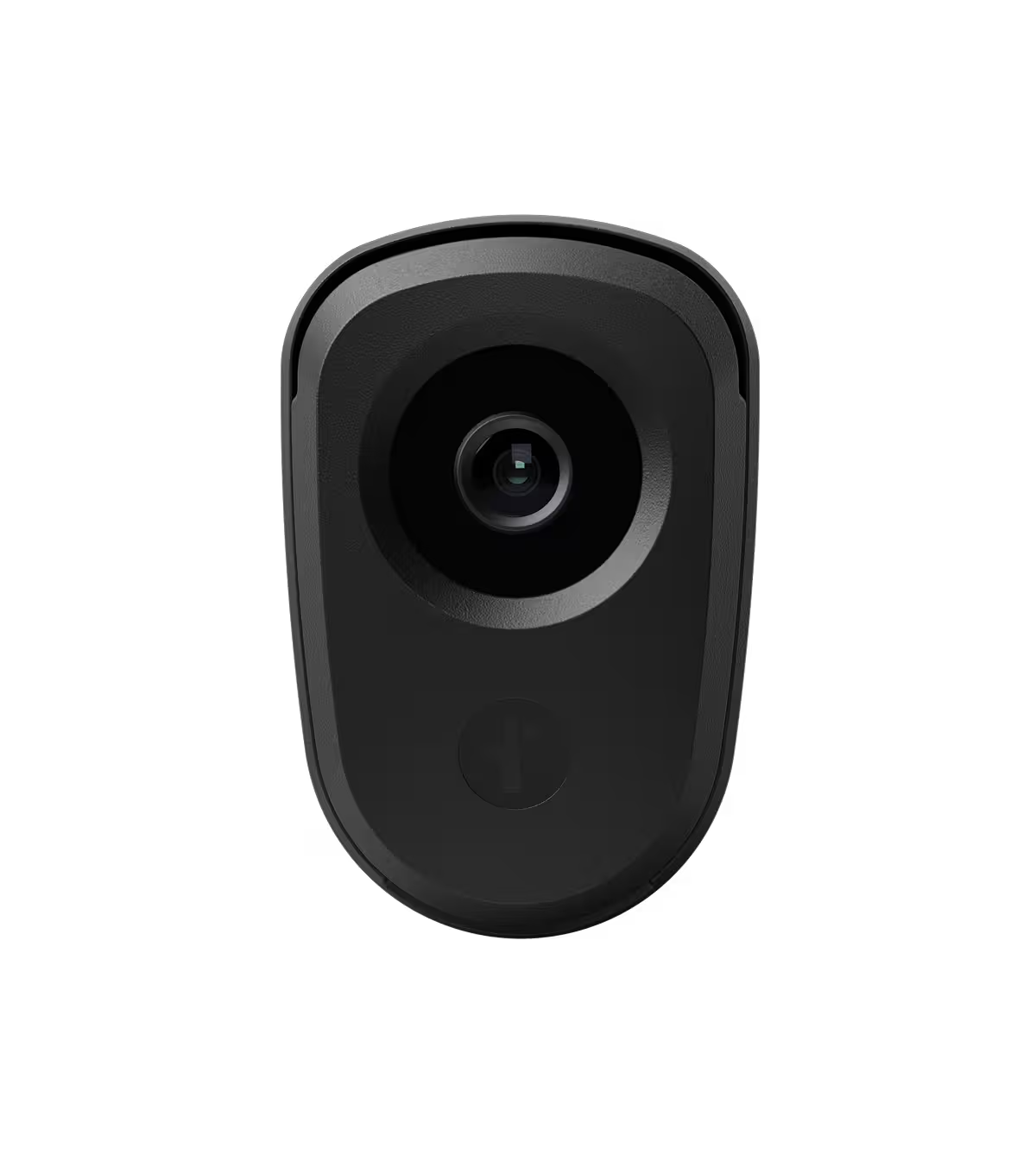
Flock has emerged as a leading provider of ALPR technology, offering a comprehensive license plate reader camera system that includes the following:
- Infrastructure-free: Using solar-powered, wireless cameras, Flock devices eliminate the need for expensive electronic trenching or internet cabling. This reduces both upfront costs and time-to-value for businesses.
- Real-time alerting: If a vehicle on a custom hotlist enters your property, your security team is notified immediately via text, email, or in-app alert.
- Vehicle identification: Plate reads are often just the starting point for an investigation. Systems like Flock’s Vehicle Signature technology analyze additional attributes (including the vehicle’s make, color, body type, and distinguishing features such as roof racks, stickers, or body damage), helping investigators identify vehicles with greater confidence than plate data alone.
- Investigations continue when plate data is limited: The system is designed to maintain investigative momentum even when traditional plate data is obscured. It can read paper, temporary, and covered plates, and also supports vehicle identification when plates are incomplete or missing entirely.
- Reliable performance day and night: Utilizing dedicated NightVision™ technology, Flock hardware delivers accurate vehicle reads in low-light and no-light conditions, ensuring 24/7 visibility.
- Defensible data by design: To ensure investigative data can withstand legal scrutiny, every search within the system requires an offense type and a reason tied to a specific case. This approach supports accountability and reflects Flock’s public safety by design philosophy.
- Faster deployment: Through a single subscription, the company manages the hardware, installation, cellular connectivity, permitting, poles, and ongoing maintenance.
Learn how Flock license plate reader cameras help businesses identify vehicles faster and strengthen investigations.
2. Rekor Systems: Best for government and infrastructure projects
Rekor Systems is a prominent provider in the public sector, specializing in the high-capacity demands of municipal and highway environments.
- Advanced AI-powered vehicle analytics: Rekor’s hardware is designed to provide deep analytics for vehicles traveling at highway speeds across complex city networks.
- Real-time traffic management: The system delivers immediate data designed to support public safety initiatives and optimize large-scale traffic flow.
- Regional dashboards: Rekor provides centralized tools for pattern and trend analysis across multiple locations.
- Strong government partnerships: Rekor has an extensive history of large-scale deployments within government and infrastructure projects.
- Enterprise barriers: Although powerful for public works deployments, the infrastructure requirements and specialized system configurations can be cost-prohibitive or overly complex for smaller, site-specific commercial businesses.
3. Genetec AutoVu: Best for existing Genetec users
For organizations already using Genetec Security Center, the AutoVu system offers deep ecosystem integration, allowing operators to manage vehicle identification alongside existing video feeds and badge readers.
- Full suite integration: The system integrates with Genetec’s broader video management and access control suite, helping streamline security workflows.
- High-accuracy hardware: AutoVu delivers high recognition rates through purpose-built cameras and dedicated ALPR hardware.
- Deployment versatility: The system supports both mobile enforcement vehicles and fixed installations.
- Unified security environment: This approach works well for organizations seeking a cohesive Genetec environment where security tools operate within the same platform.
- Resource requirements: Because it requires proprietary hardware and a significant initial setup, this system may be less flexible for smaller organizations or those without a dedicated IT infrastructure.
4. Avigilon: Best for enterprise video management integration
Avigilon, a Motorola Solutions company, embeds plate recognition capabilities into its high-end video security devices.
- Motorola Solutions ecosystem: The system is a natural fit for organizations already using Avigilon Control Center (ACC) for video management, providing a unified and familiar interface.
- AI-powered video analytics: By leveraging AI-powered video analytics alongside plate recognition, the system provides additional context around vehicle activity, such as identifying unusual loitering or specific movement patterns.
- Multi-purpose hardware: Avigilon supports high-resolution fixed cameras optimized for both LPR and general security monitoring, which can reduce the need for separate hardware deployments across a property.
- Data residency flexibility: With both cloud and on-premise deployment options, the system offers flexibility for organizations with strict legal or corporate data residency requirements.
- Enterprise focus: The complexity and total cost of ownership associated with the underlying system and server requirements may be a barrier for smaller commercial deployments.
5. Insight LPR: Best for flexible, hardware-agnostic deployments
Insight LPR provides a hardware-agnostic alternative for businesses that already have an existing camera infrastructure.
- Data storage control: The system supports both on-premise and hybrid deployments, giving internal IT teams greater control over where sensitive vehicle data is stored and processed.
- Operational intelligence: Insight LPR offers features like watchlist alerts, reporting dashboards, and API integrations that connect with access control and other security platforms.
- Proprietary independence: This is a practical option for organizations that want LPR functionality but prefer not to commit to a single proprietary hardware ecosystem.
- Implementation considerations: The system may require more hands-on configuration and a higher level of IT involvement to ensure integrated ALPR hardware is properly calibrated with third-party devices.
Factors to consider when choosing an ALPR provider
- Accuracy and processing speed: Ensure the hardware can capture high-resolution data at highway speeds and in adverse weather. The system should also process that data within seconds to support the real-time response required for active incident detection.
- Integration with existing systems: Look for providers that support integration with your existing VMS, access control hardware, and internal data platforms.
- Quality of technical support: Prioritize providers that offer ongoing training, strong uptime guarantees, and secure options for sharing vehicle evidence with local law enforcement when appropriate.
- Total cost of ownership (TCO): A TCO analysis should include hardware, integrated ALPR system licensing, professional installation, and ongoing maintenance. Turnkey or subscription-based models can provide more predictable costs while keeping hardware and platform components current.
For a deeper evaluation framework, see this chief’s guide to evaluating license plate readers, which outlines nine key questions to ask before investing.
What to consider with data privacy and compliance
Responsible deployment of a vehicle intelligence system is not only a legal requirement but also an important step in maintaining community and customer trust.
To protect your organization and ensure ethical use, implement clear data governance policies that align with state-specific ALPR statutes. At the federal level, courts have confirmed that license plate reader cameras are constitutional when used with appropriate safeguards.
Prioritize the following criteria:
- Data minimization: A 30-day retention policy is widely considered an industry standard, allowing organizations to investigate incidents while avoiding unnecessary long-term storage of vehicle data.
- Purpose limitation: Use collected data only for legitimate security and operational purposes. Vehicle intelligence should support incident investigation, safety, and logistics, not tracking individuals for marketing or other unauthorized purposes.
- Encryption: Ensure your chosen system uses strong encryption both while data is stored and while it’s transmitted.
- Audit logs: Professional systems should maintain permanent, unalterable audit logs that record who accessed data and why, supporting internal accountability.
- Adherence to major regulations: Compliance with frameworks such as the General Data Protection Regulation (GDPR) and the California Consumer Privacy Act (CCPA) helps demonstrate that your organization is handling vehicle data responsibly.
For more information on privacy safeguards and responsible deployment practices, visit the Flock Trust Center.
Tips for maximizing ROI with your ALPR investment
- Tie deployment to clear KPIs: Measure success through tangible metrics such as reduced manual labor hours, increased parking revenue, or faster investigation times.
- Integrate with real workflows: Connect your LPR data with existing daily workflows, such as automated gate access for known vendors or real-time mobile notifications for on-site security patrols.
- Prioritize placement over specs: Factors like mounting angle, distance from the vehicle, and lighting conditions often have a greater impact on performance than hardware specifications alone.
- Keep alerts tight to avoid noise: Configure your ALPR system to send notifications only for high-priority hotlist matches. This helps ensure security teams remain responsive when a real threat appears.
- Control access and searchability: Protect data integrity by limiting who can search the system and requiring a specific reason for every query.
- Use analytics for operations, not just incidents: For example, analyze peak traffic patterns to help parking management teams improve staffing or monitor delivery bays to reduce dwell time and logistics bottlenecks.
- Choose open, scalable platforms: Prioritize secure platforms with open API integrations so your system can scale as your property or operational needs grow.
Build safer communities with smarter technology
Modern license plate reader cameras give organizations the ability to identify vehicles quickly, automate alerts, and generate searchable vehicle records that support faster investigations. When deployed thoughtfully, these systems help businesses strengthen security operations while maintaining responsible data practices.
Flock’s connected ecosystem combines license plate reader cameras with real-time alerts, vehicle intelligence, and collaborative tools that improve coordination across communities. This approach helps businesses identify vehicles faster, coordinate with law enforcement when needed, and manage property security with greater confidence.
See how Flock helps businesses identify vehicles faster with license plate reader cameras. Book a demo today.
FAQs
What is automatic license plate recognition (ALPR) software?
ALPR systems use specialized cameras, optical character recognition (OCR), and AI to automatically capture and convert license plate images into searchable vehicle data. The cloud-based components that support these devices allow businesses to identify vehicles, create watchlists, and streamline investigations.
How accurate are ALPR systems?
Accuracy depends on camera quality, lighting conditions, AI models, and system configuration. Enterprise-grade ALPR systems use infrared illumination, adaptive learning, and cloud-based management platforms to maintain high recognition rates across varied environments.
Can ALPR systems work at night or in bad weather?
Yes. Advanced ALPR systems use infrared illumination, HDR processing, and weather-resistant hardware to maintain accuracy in low-light, rain, and other challenging environments.
Are ALPR systems legal for businesses to use?
In most jurisdictions, businesses can deploy ALPR systems on private property. However, they must follow applicable data privacy laws, implement proper retention policies, and ensure secure handling of collected vehicle data.


Protect What Matters Most.
Discover how communities across the country are using Flock to reduce crime and build safer neighborhoods.