
.webp)
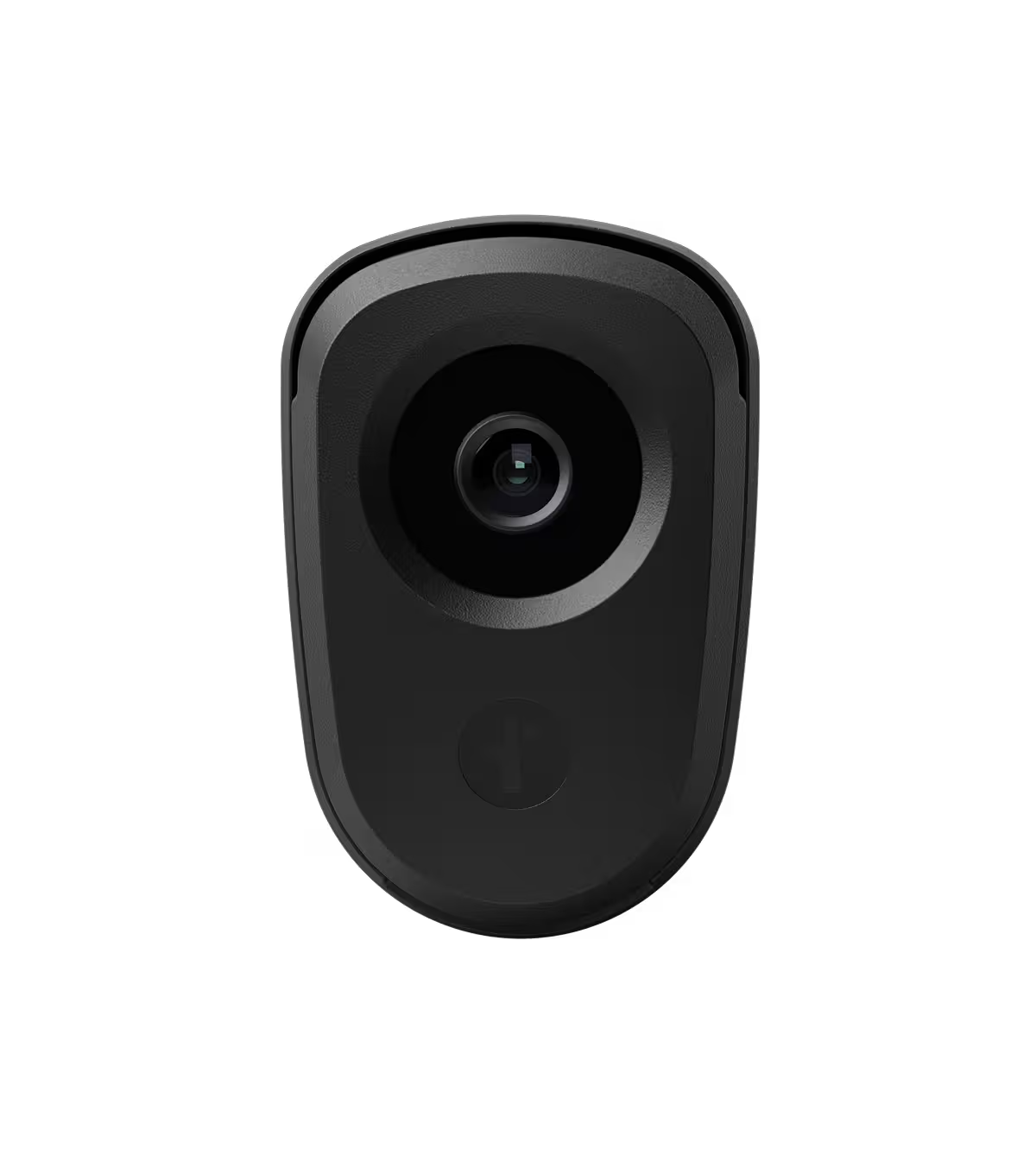



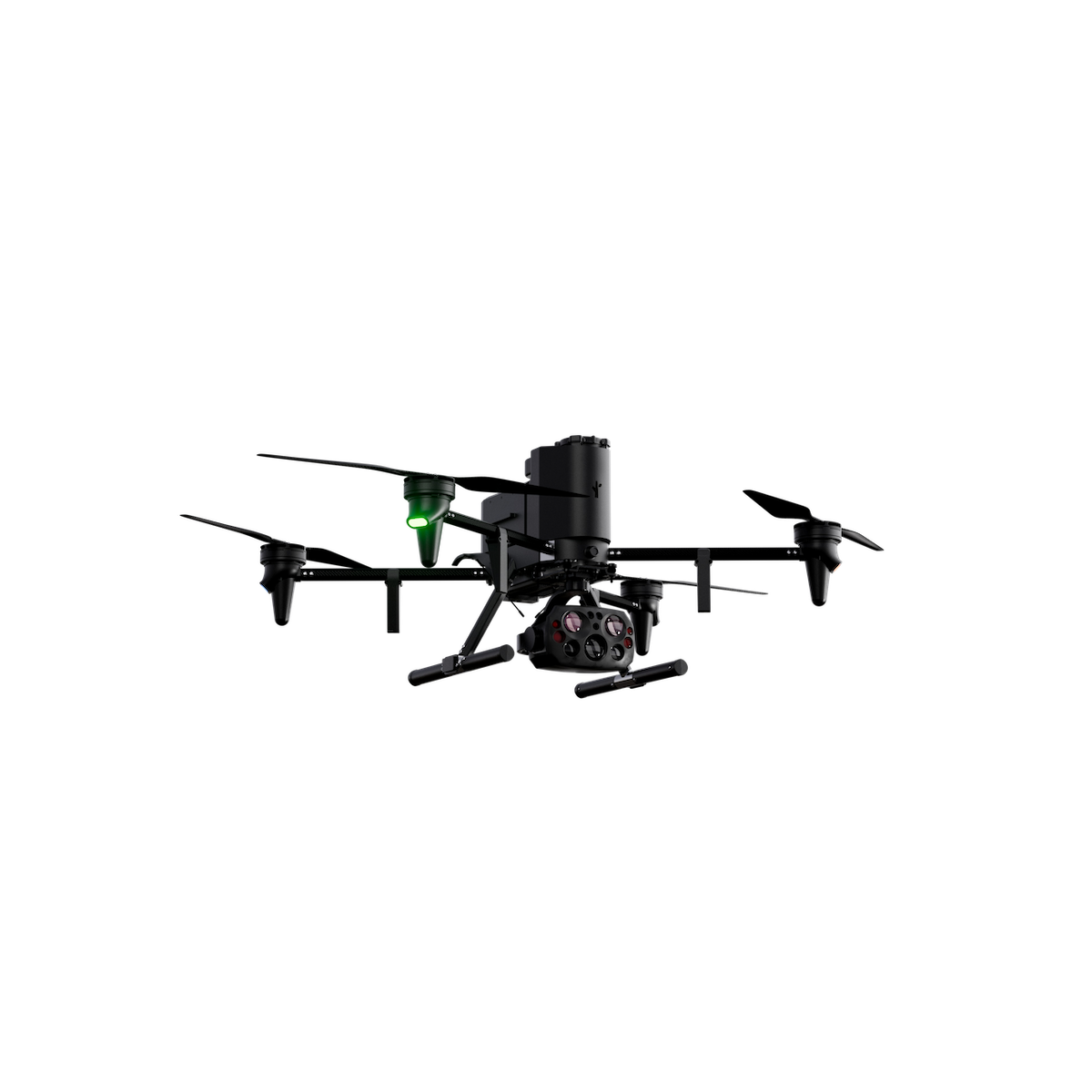




Communities across the country are proving what’s possible when technology and community work hand in hand to make cities safer. Every single day, folks across Flock hear from law enforcement partners who are using our technology to recover human trafficking victims, find missing children, and recover stolen vehicles 10x faster.
These stories aren’t theoretical; they’re real lives changed, real harm prevented, and real proof that technology, when used responsibly, can serve the public good.
But even as Flock’s partners from Oakland, CA to Fort Worth, TX celebrate these outcomes, the conversation around public safety technology too often misses the point. Fair questions about the appropriate balance of power, privacy, and accountability devolve into the wrong debate.
Flock’s ground truth is that the most basic function of a successful government is to keep its citizens safe, and to do that, all levels of a government need modern tools.
The Role of Government and the Balance of Power
Every level of government has an important role in public safety. The balance of a functioning democracy relies on the question of how to enable collaboration without eroding autonomy:
- Local Control: The entity that owns the technology, whether a city, county, or private business, always must retain control over who accesses its data, how it is used, and for how long it is stored. In California, because of state legislation, that means no federal or out-of-state agencies should have access to publicly-funded California License Plate Readers (LPR) cameras. In states without LPR legislation, each community decides for itself. That’s not centralization; it’s autonomy at the most local level possible.
- Transparent Governance: Vendors should strive to enable strong, mutually agreed upon policies with their customers. Explicit, transparent contractual language should define and limit the obligations of each party to securely manage data, enable auditing, and control their sharing relationships. Technology vendors can partner with any relevant local, state, and federal agency, but must define these relationships transparently.
That should include the ways that communities can choose to collaborate with each other. Distinct from Flock, communities already successfully make these decisions every day. Collaboration between local and federal agencies, for example, have allowed police in a Detroit suburb to coordinate with Homeland Security to arrest child sex predators at the NFL Draft.
What “a Reasonable Expectation of Privacy” Really Means Today
The discourse around technology and privacy are often framed in hypotheticals. The truth is less abstract: the encroachment on unencumbered privacy is already here, and it’s in your pocket, on your wrist, and in your wallet. Over time, society has collectively agreed that convenience, productivity, and connection are worth certain reasonable trades.
From Netflix recommendations to Google Maps directions to social media’s endless scroll, we’ve built a world where efficiency and personalization require data. Every day, we make choices to trade a piece of our privacy so that corporations can sell another pair of sneakers or a new lipstick.
The idea of a “reasonable expectation of privacy” is not fixed in stone. It’s a living standard, and it evolves as our values, technologies, and experiences evolve. The law has always adapted to those shifts in society’s expectations, and it should continue to do so.
Just as individuals can make tradeoffs, so too can communities. Looking specifically at the Flock platform, there is a clear spectrum of choice. A community can choose how long their data is retained, what are the acceptable use cases, and who you’re willing to collaborate with. All of these choices have tradeoffs — a shorter data retention period may mean the community is not going to solve some crime. Choosing to limit collaboration between other agencies will likely limit a police department’s resources and reach. But those are all decisions that should be weighed, transparently, with a real conversation about the pros and cons.
Flock does not work with Palantir. Palantir has no relationship with Flock and has no access to any Flock customer data. Unlike predictive policing platforms, Flock is purpose-built for local agencies with strict data ownership, 30-day default retention, and full auditability.
Technology will continue to evolve. Crime will continue to evolve. The tools and tactics we use, as those who seek justice and safety, also must evolve. If our tools stand still, people suffer.
The Privacy Myth Around Vehicles
Just as we must ground ourselves in reality around the privacy we actually have in modern society, we should do the same with the question of License Plate Recognition (LPR) technology in particular. This technology is a proven tool that helps law enforcement get a lead toward solving crimes, finding missing children, and preventing harm.
What is the purpose of a license plate? Every driver in the U.S. gives their state DMV an address and individual details, so they can issue a license plate to ensure that DOTs and public safety agencies can keep roads safe. LPRs take a picture of the plate and the outside of a vehicle (which anyone can already see).
- All of this information is publicly available and in plain view;
- All this information gets permanently deleted on a rolling basis, usually after 30 days;
- If anyone accesses this system, there is a permanent record of how they used it, when they used it, and why they used it.
Again, this isn’t a hypothetical. This debate is being waged right now across the country, and the tradeoffs are obvious. In fact, in an amicus brief filed in a Virginia court (Commonwealth v. Church), the Electronic Frontier Foundation (EFF) argued it is better to let a convicted rapist’s punishment be overturned than to have used an LPR to convict him.
The Virginia Court of Appeals disagreed with the EFF’s interpretation: “Because the Flock system simply took pictures of the license plate and Church’s vehicle as he drove it down public thoroughfares in the City of Norfolk, the circuit court erred in ruling that a search warrant was required for police to access the Flock system. Consequently, we reverse the circuit court’s ruling that granted Church’s motion to suppress.”
Courts across the country - including two federal courts of appeals, twenty federal district courts, and four state appellate courts - have uniformly upheld the constitutionality of LPRs. Why? It isn’t because there is zero exchange of privacy, but because the exchange is a reasonable one that stops violence from recurring.
The Core Values Don’t Change
Technology changes. Expectations change. But principles shouldn’t. We retain our commitment to protecting the vulnerable. We’ll always be committed to supporting the first responders who risk their lives to do that work. Our insistence on transparency, on constitutional integrity, on public trust will not change.
Those are the constants. They’re the guardrails that ensure our pursuit of safety doesn’t come at the expense of liberty.
It’s time to stop fighting hypothetical battles and start facing today’s realities with honesty, transparency, and the courage to design systems that mitigate our fears but protect the efficacy of the impact. The goal isn’t a world without tradeoffs. It’s a world where we make them consciously, together.
Let’s start talking about solving real problems, together.


Protect What Matters Most.
Discover how communities across the country are using Flock to reduce crime and build safer neighborhoods.