
.webp)








Rethinking Infrastructure Protection for Federally Owned Buildings

Federally owned buildings serve as the backbone of government operations. Courthouses, federal campuses, and agency offices are places where critical work happens every day. They are also increasingly complex environments to protect. Threats evolve, facilities remain open by design, and staffing constraints continue to challenge traditional security models.
For decades, infrastructure protection has centered on fixed measures. Access control at doors. Cameras inside buildings. Guard posts at known choke points. These tools still matter, but on their own they no longer provide the visibility or responsiveness required to protect modern federal facilities.
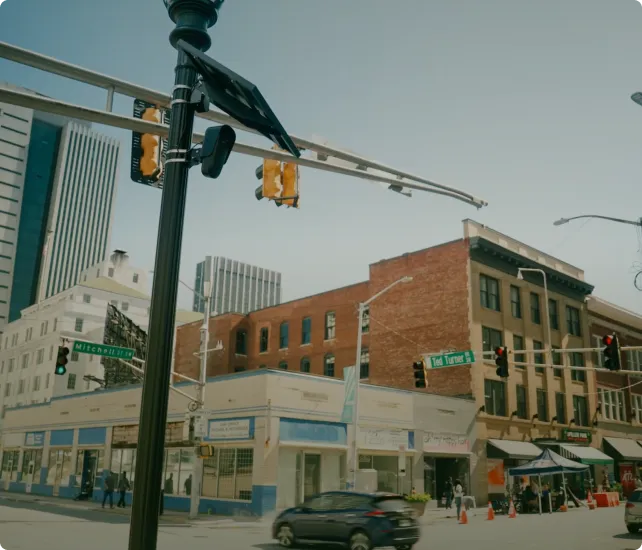
The reality is that risk does not begin at the front door. It develops across parking areas, perimeter roads, surrounding neighborhoods, and shared public spaces. Effective protection today requires awareness that extends beyond the building itself.
The limits of traditional protection models
Many federally owned buildings rely on systems that operate in isolation. Video systems that require manual monitoring. Sensors that trigger alerts without context. Security teams that must piece together information after an incident has already unfolded. This constrains security teams, requiring them to piece together information post incident occurrence.
This fragmentation creates blind spots. It slows response. It increases reliance on personnel to detect patterns that technology should surface automatically.
Staffing challenges only amplify these gaps. Federal agencies are being asked to do more with fewer resources while maintaining open, accessible facilities that serve the public. The result is a growing mismatch between mission responsibility and operational capacity.
Why perimeter awareness matters
Modern infrastructure protection begins with understanding what is happening around a facility, not just inside it.
Vehicle activity near federal buildings often provides early indicators of risk. Repeated drive-bys. Unusual parking behavior. Vehicles that appear at multiple locations over time. When identified early, these patterns can prompt proactive action rather than reactive response.
Similarly, visual and auditory awareness across the perimeter helps security teams quickly assess situations as they emerge. A sound associated with a high-risk event. A visual anomaly near a restricted area. The ability to verify conditions in real time can dramatically change outcomes.
This layered approach shifts protection from static defense to active awareness.
An integrated approach to federal facility protection
Technology plays a critical role in closing these gaps when it is deployed as a unified capability rather than a collection of disconnected tools.
A modern infrastructure protection stack can include:
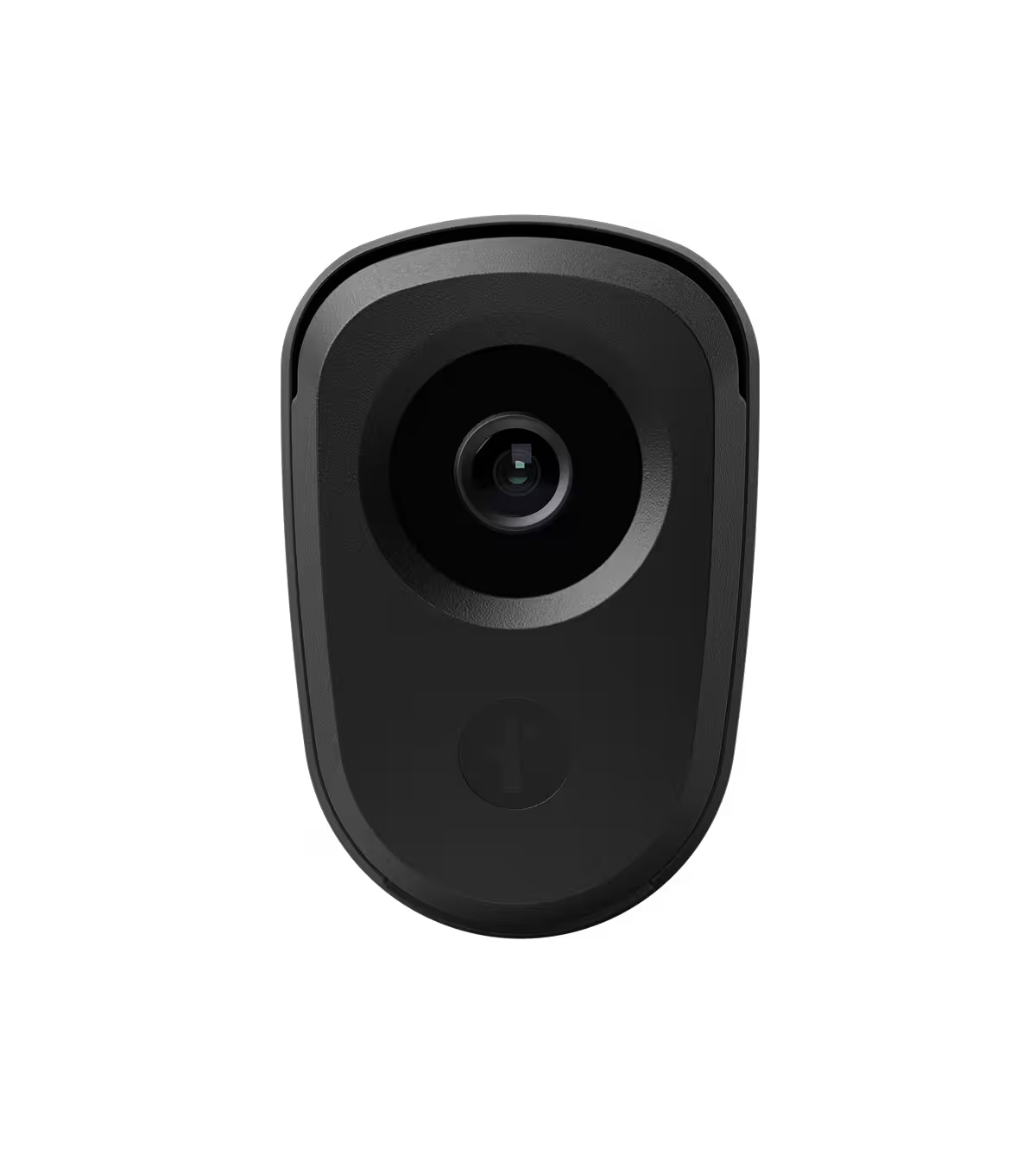
- License plate recognition to support perimeter awareness and identify vehicle patterns that warrant attention
- Video and drone-based response to provide rapid visual context, overhead awareness, and verification across large or complex facilities
- Gunshot Detection to surface critical events immediately and reduce reliance on chance observation
- Mobile Security Trailers (MSTs) to deliver rapidly deployable, self-contained surveillance and perimeter monitoring for temporary operations, elevated threat conditions, or facilities requiring immediate security augmentation without permanent infrastructure changes.
When integrated, these capabilities give security teams a clearer operating picture. They reduce the time between detection and decision. They enable a more proactive approach to facility protection, allowing limited personnel to focus on informed response rather than continuous monitoring.
Importantly, this approach supports the safety of personnel across federal facilities, including protective staff, employees, and visitors.
Speed to value matters in the federal environment
Federal agencies cannot afford multi-year timelines to improve facility protection. Threats do not wait for long implementation cycles.
Technology that delivers rapid operational value, requires minimal physical infrastructure, and integrates with existing workflows is essential. Solutions must be deployable without extensive construction or disruption. They must provide immediate benefit while remaining adaptable as mission needs evolve.
Experience across law enforcement and security environments shows that the most effective technology is not the most complex. It is the technology that teams can rely on quickly and consistently.
Looking ahead
Ensuring the safety of those who work in, visit, and protect federal facilities is vitally important. What is changing is how that mission is carried out.
Infrastructure protection is moving toward integrated awareness, faster verification, and smarter use of limited resources. Agencies that adopt these approaches gain resilience and clarity. They reduce blind spots and strengthen their ability to protect the people and places they serve.
At Flock, we believe modern infrastructure protection starts with visibility, speed, and trust in the systems that support those missions. As federal agencies continue to modernize how they protect critical facilities, technology must serve as a force multiplier that supports personnel, enhances awareness, and keeps federal spaces secure without compromising accessibility.
Interested in learning more about Flock? Talk to a Safety Expert today.


Protect What Matters Most.
Discover how communities across the country are using Flock to reduce crime and build safer neighborhoods.