
.webp)




.jpg)


Top 6 License Plate Recognition Cameras for Law Enforcement
Discover the top 6 license plate recognition cameras, offering proven, strategic solutions to help law enforcement leaders deter theft and build stronger cases.

License plate recognition (LPR) cameras are specialized systems that capture vehicle plates and convert them into searchable data using optical character recognition. Unlike a traditional security camera system, these cameras are designed to produce clear plate images across a range of lighting and traffic conditions, allowing agencies to identify vehicles connected to incidents.
This guide reviews six leading LPR cameras used in law enforcement and commercial environments, outlining how each supports investigations, evidence collection, and situational awareness.
Key takeaways
- License plate recognition (LPR) cameras are purpose-built systems that go far beyond standard video. They capture and convert plate data into real-time, searchable vehicle intelligence.
- Modern LPR camera solutions combine high-resolution optics, infrared illumination, on-device AI, and cloud analytics to maintain accuracy across varying speeds, lighting conditions, and environments.
- For law enforcement and security teams, real-time alerts, cross-jurisdiction data sharing, and searchable vehicle histories can improve response times and support faster case resolution.
- Not all LPR camera systems are equal. Vehicle identification that extends beyond plate text (make, color, body type) can reduce false positives and help investigations continue when plate data is incomplete or missing.
- Integration, durability, data retention controls, and compliance features are critical evaluation criteria, not just image quality and specs.
What is license plate recognition camera technology?
A license plate reader camera helps law enforcement and security teams identify vehicles in real time. Unlike traditional video cameras that record activity for later review, LPR camera systems detect license plates and convert them into searchable records.
Key components of LPR camera technology include:
- High-resolution sensors designed to capture high-quality plate images, even at long range or in moving traffic
- Infrared (IR) illumination that supports accurate reads in low-light or nighttime conditions
- Optical character recognition (OCR) that extracts alphanumeric characters and translates them to digital text for database comparison
- Analytics software that can identify vehicle attributes such as color, make, model, or distinguishing features like roof racks or visible damage
Together, these capabilities help agencies locate vehicles connected to incidents and support faster investigative response.
How LPR cameras work for law enforcement
There are four main steps involved in the LPR camera system process:
- Vehicle detection and capture: The system detects vehicles entering its field of view and captures a high-resolution image under a range of traffic, lighting, and weather conditions.
- OCR processing: OCR software identifies the license plate and converts the image into alphanumeric text.
- Database comparison: The system compares the license plate text against relevant databases and agency-configured watchlists, such as the National Crime Information Center (NCIC) or state-level hotlists.
- Real-time alert: When a match occurs, such as a stolen car or one linked to an AMBER Alert, the system sends a real-time notification to patrol officers or dispatchers.
Top 6 license plate recognition cameras for law enforcement
Selecting the right LPR camera technology is a critical decision for agency leaders. The following six solutions were chosen based on field-proven reliability, image quality, and their value for modern public safety operations.
1. Flock
Best for: Agencies seeking AI-driven LPR camera coverage with built-in collaboration and compliance tools.
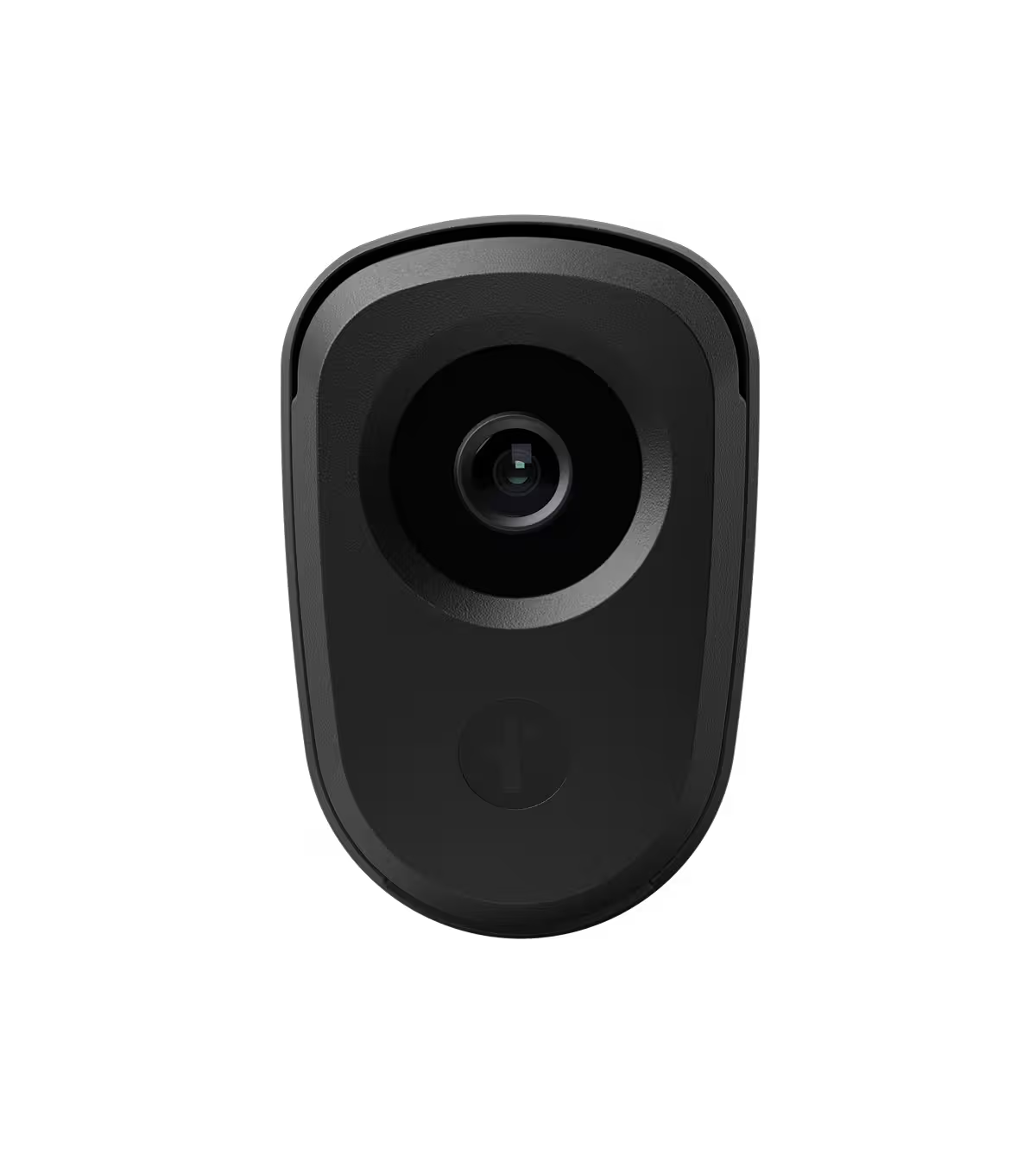
Flock provides an LPR camera platform designed to support real-time investigations and cross-agency collaboration. It goes beyond standalone hardware, combining high-speed cameras with AI-powered analytics and real-time alerts in a secure, cloud-managed system.
While traditional systems rely primarily on plate text, Flock uses its proprietary Vehicle Fingerprint® technology for vehicle identification based on thousands of unique characteristics. The system identifies attributes like:
- Vehicle make, color, and body type
- Roof or ladder racks
- Bumper stickers or decals
- Visible vehicle damage or distinguishing features
This allows investigators to generate leads even when plates are missing, covered, or temporary. With FreeForm Search, agencies can use plain-language descriptions such as “blue pickup truck with a ladder rack,” rather than relying only on plate numbers or rigid filters.
The platform also includes native state identification built directly into LPR workflows, helping investigators validate results and reduce false positives when plate data is incomplete or misread.
Flock is designed to support collaboration across jurisdictions, recognizing that many investigations extend beyond city boundaries. Agencies can opt into a nationwide network that processes 20B+ reads per month across 49 states, connecting more than 6,000 law enforcement partners. The system can also deliver hotlist alerts for vehicles connected to incidents, helping agencies respond faster.
The cameras are designed for flexible deployment and support:
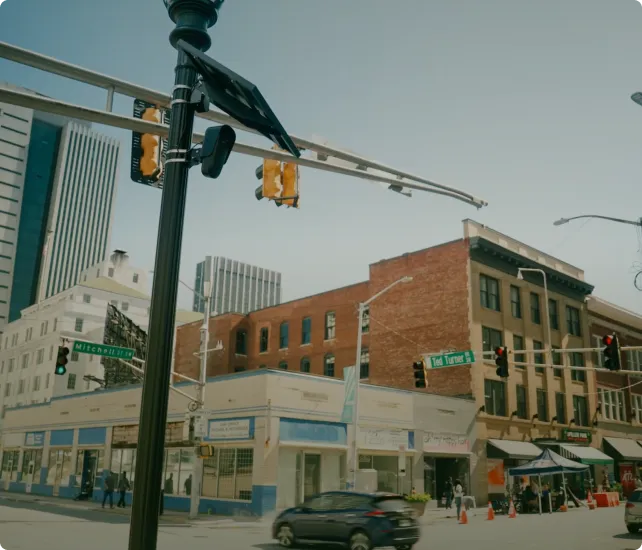
- Solar or AC power options
- LTE connectivity for remote locations
- Installation without trenching or complex infrastructure
The company follows a Public Safety by Design approach focused on transparency and accountability. Every search requires a documented reason tied to a case number, and all searches are logged in an audit trail for internal review. Data is automatically deleted after 30 days unless it’s preserved as evidence. Agencies can also publish their LPR camera policies and system usage through a public transparency portal.
Flock provides hardware, software, installation, and ongoing maintenance through a single subscription model, giving agencies predictable costs without the burden of managing hardware lifecycles.
Learn how the Flock LPR camera platform supports modern investigations and cross-agency collaboration.
2. Motorola L6
Best for: Law enforcement agencies needing a durable LPR camera for patrol vehicles and fixed installations.
Motorola’s L6 is built for demanding law enforcement environments, with a ruggedized design suitable for outdoor and in-vehicle deployment. Flexible power options support temporary checkpoints or changing deployment locations.
A key strength of the L6 is its connection to the broader Motorola Solutions public safety ecosystem. It feeds plate reads and hotlist alerts directly into Vigilant VehicleManager and CommandCentral Aware, allowing dispatchers and patrol officers to view LPR camera data alongside CAD and records management systems.
The L6 performs best when deployed within the Motorola Solutions environment. Agencies using mixed-vendor platforms may find the integration less seamless than those already standardized on Motorola CAD/RMS.
3. Genetec CloudRunner
Best for: Law enforcement teams operating within the Genetec Security Center.
Genetec CloudRunner is a cloud-native LPR camera solution designed to connect fixed cameras and investigative data.
For agencies using Genetec Security Center, CloudRunner extends the platform by combining LPR camera data with video feeds, access control systems, and plate data management.
CloudRunner supports vehicle-based searches, allowing investigators to filter by attributes like color, make, and model to identify vehicles even when plate data is incomplete. It also enables shared hotlists across multiple sites and agencies.
Genetec places a strong emphasis on governance, offering features such as data masking, configurable retention policies, and audit trails to support compliance with privacy regulations.
CloudRunner is built to scale within the Genetec ecosystem, making it best suited for agencies that want to centralize LPR camera data within an existing Genetec infrastructure.
4. Axon Outpost
Best for: Agencies using Axon devices that want LPR camera functionality integrated with their evidence management ecosystem.
The Axon Outpost provides LPR camera functionality in locations where power or wired infrastructure may be limited. Its primary advantage is native integration with the Axon Evidence platform. For agencies already using Axon body cams or fleet cameras, LPR camera data from the Outpost flows into the same ecosystem.
The Outpost is solar-powered and LTE-connected, allowing deployment in locations with limited infrastructure. When a hotlisted vehicle is detected, the system sends an alert directly to the Axon Respond platform so officers can receive LPR camera alerts through the same application used for bodycam systems.
Axon can be a strong fit for agencies prioritizing evidence management and prosecutorial workflows. However, the system performs best within the Axon ecosystem, and agencies using mixed-vendor platforms may find cross-system flexibility more limited than open-architecture alternatives.
5. Rekor Edge
Best for: Agencies and municipalities seeking deep vehicle analytics beyond basic plate capture.
Rekor developed its Edge series for high-volume environments such as highways and state borders. The cameras use onboard edge processors to identify license plates and vehicle attributes, including make, model, and color, directly on the device.
Rekor's software is flexible and can allow agencies to run its LPR AI on existing IP cameras, which may reduce hardware costs for departments with legacy infrastructure. However, the system is more technical to configure and may be better suited for agencies with dedicated IT teams or real-time crime centers (RTCC).
6. Verkada CR63-E
Best for: Law enforcement teams looking for straightforward deployment and centralized cloud management.
The CR63-E is Verkada’s dedicated LPR camera, designed for simplicity and ease of deployment. Unlike LPR-only units, Verkada cameras can also function as high-definition security cameras.
Verkada is known for its streamlined interface, offering real-time alerts, license plate search, and configurable retention policies through a centralized dashboard. For smaller agencies or city departments, the Verkada Command platform can be managed through a mobile device without requiring a dedicated LPR team.
The cameras use a single-cable installation that provides a reliable, high-bandwidth connection suited for permanent city infrastructure.
Agencies evaluating these systems may consider how well the platform supports broader law enforcement collaboration and data-sharing needs.
Key features that distinguish LPR cameras from standard video cameras
Standard video cameras record activity, while LPR cameras extract searchable vehicle data. Traditional cameras often struggle to capture plates clearly when vehicles are moving or lighting conditions are poor.
LPR cameras address these challenges through three core capabilities:
- Specialized optics and high-speed shutters: Standard cameras often use slower shutter speeds to maintain brightness, which can blur a moving vehicle. LPR cameras use faster shutter speeds to freeze motion, capture clear plate images, and maintain accuracy across multiple lanes of traffic and varying vehicle speeds.
- Intelligent lighting and glare suppression: Headlights and sunlights can wash out license plates. LPR cameras use infrared illumination, optical filters, and high dynamic range (HDR) settings to improve plate readability in both daylight and nighttime conditions.
- Structured vehicle data: Instead of producing only video, LPR cameras generate searchable vehicle data that can be compared against hotlists or filtered by vehicle attributes and partial details. These systems are also designed for continuous roadside operation and integration with investigative platforms.
Comparing regular security cameras to LPR camera systems
Law enforcement leaders often ask whether existing CCTV or municipal video networks are sufficient for capturing license plates. Before choosing between a standard camera and a dedicated LPR camera system, agencies should evaluate their risk level and incident patterns. Standard cameras can record general activity, but they aren’t designed to consistently capture clear license plate images.
Lighting conditions, motion blur, and camera placement can make license plates difficult to read, especially when vehicles are moving. LPR camera systems are designed to address these challenges. They use specialized optics, infrared illumination, and analytics to capture license plate images and convert them into searchable vehicle records.
Standard video cameras can still support general situational awareness. However, locations such as city entry points, high-traffic intersections, retail parking lots, or corridors frequently used by stolen vehicles often benefit from dedicated LPR camera systems. These allow investigators to identify vehicles connected to incidents more quickly.
Factors to consider when choosing a license plate recognition camera
When evaluating an LPR camera, agencies should consider how it will perform in their specific environment by considering four key factors:
- Operational environment: High-speed highways require faster shutter speeds and high resolution to capture plates at a distance. Urban intersections may need wider lenses to cover multiple lanes or exits.
- Total cost of ownership: Beyond the initial price, consider long-term costs such as cellular connectivity, cloud storage, and ongoing hardware or software services.
- Integrations and alerts: Native integration with existing CAD, RMS, or real-time crime center systems, combined with real-time alerts, help agencies act on LPR camera data more effectively.
- Reliability and durability: Look for outdoor-rated, vandal-resistant housings that can withstand local weather conditions without affecting sensor performance.
Data privacy and legal considerations: What to know
LPR cameras should support law enforcement compliance requirements through built-in controls such as access management and audit logs. These tools help agencies restrict access to authorized personnel and maintain a record of activity.
Systems should also allow agencies to configure data retention policies so information is deleted or archived according to legal requirements. Encryption and security controls should align with Criminal Justice Information Services (CJIS) standards.
Transparency around LPR camera use is also important for public trust and legal defensibility. Clear signage and publicly available policies can help communities understand how the technology supports investigations and evidence collection.
For more information on maintaining these standards, review Flock’s compliance and trust documentation.
Get started with real-time, modern vehicle awareness
The right license plate recognition camera does more than capture vehicle data. It helps agencies monitor vehicle activity, surface useful leads, and respond more quickly when incidents occur.
Flock’s platform reflects this modern approach by combining license plate reader cameras, analytics, and real-time alerts in a connected system that supports collaboration across jurisdictions while maintaining strong privacy and security standards.
Ready to enhance your agency's investigative capabilities? Book a demo with Flock today.
FAQs
What is a license plate recognition (LPR) camera?
An LPR camera is a specialized device that captures clear images of vehicle plates and uses optical character recognition (OCR) and AI to convert them into searchable data. Unlike standard security cameras, LPR camera systems are optimized to maintain accuracy across varying speeds and lighting conditions.
How are LPR cameras different from regular security cameras?
Standard cameras record video that investigators must review manually. LPR cameras use specialized optics, infrared illumination, and AI analytics to automatically extract plate numbers and generate searchable vehicle records in real time.
Do LPR cameras work at night?
Yes. Most modern LPR systems use infrared illumination and high dynamic range (HDR) imaging to maintain accuracy in low-light or nighttime conditions.
Are license plate recognition cameras legal for law enforcement to use?
In most jurisdictions, law enforcement agencies can deploy LPR cameras on public roads and property in accordance with local laws and department policy. Proper retention policies, access controls, and transparency measures help ensure responsible and legally defensible use.


Protect What Matters Most.
Discover how communities across the country are using Flock to reduce crime and build safer neighborhoods.