
.webp)





.jpg)


5 Best Public Safety Drones for Law Enforcement and Emergency Teams
Find out and evaluate the 6 best public safety drones presented as strategic, practical tools to deter crime and protect assets in 2026.

Before drones, response teams were often expected to blindly enter hazardous areas, creating risks for both personnel and potentially the general public. Today, teams increasingly deploy drones to assess real-world conditions and develop more targeted solutions.
As drone technology advances, the challenge becomes finding the right one for your operations. The latest features promise sharper imaging, longer flight times, and near-faultless obstacle navigation.
The best choice for your team depends on who’s monitoring the device, where it’s deployed, and what you need it to do. Whether you’re an EMT, firefighter, or police officer, we’ll look at how different drones compare based on common use cases.
Key takeaways
- Public safety drones have become essential tools for law enforcement, fire departments, and emergency teams to improve speed, safety, and situational awareness.
- Modern drone programs focus less on raw specs and more on real-world outcomes like de-escalation, faster scene assessment, and improved case building.
- Integration with dispatch, license plate reader cameras, and real-time crime centers significantly increases operational impact.
- Thermal imaging, secure cloud evidence storage, automation, and reliable flight time are baseline expectations in 2026.
Why drones have become essential tools for public safety
With a proven ability to collect real-time evidence and deter criminals, drones have become indispensable for public safety initiatives. Even the most basic drones can put eyes and ears on an area, while more advanced technology offers unparalleled insights to emergency teams.
Drones are becoming the standard for emergency operations because they give teams invaluable context before entering dangerous environments. They can help responders quickly assess risk, provide situational awareness, and reduce the odds of bodily injury or property damage.
As the hardware, automation, and data-sharing evolve, adoption continues to increase, and the Drone as First Responder industry is expected to triple in value by 2032.
Common challenges public safety drones help solve
Public safety drones can help solve multiple challenging situations, including:
- Lost or missing persons: Drones provide aerial visibility in seconds and can even “see through” obfuscations like smoke or fog.
- Vehicle-related incidents: Drones can integrate with license plate reader (LPR) cameras to single out a target vehicle’s location.
- Hazardous scenes: Drones collect data before human responders put themselves at risk, identifying shifting conditions so teams can prepare.
- Resource constraints: Drones fill visibility gaps for understaffed teams and can reduce unnecessary site visits.
- Public unrest: Drones can monitor at-risk areas, increase transparency, and boost public relations — all without having to coordinate multiple teams.
- False alarms: Drones allow emergency teams to confirm threats and focus on real crises.
When emergencies arise, drones help teams gain an aerial perspective first, so they can respond appropriately and in a way that supports safer outcomes.
What to look for in a public safety drone
If you're searching for a public safety drone, the best choice depends on your agency's specific mission requirements and operational context.
Your checklist should include:
- Flight times and flying distance
- Low-light and thermal imaging capability (these are distinct functions)
- Camera and optics quality, including optical zoom
- Weather resistance and durability
- Image transmission range
- Integration with dispatch, command, or evidence management systems
The ideal drone works with your current systems, supporting your workflow without rearranging operations. While it can be tempting to choose a technically impressive drone, complex features can quickly outpace your team's training or operational needs.
5 best public safety drones for law enforcement and emergency teams
Whether you deploy drones in vast mountain ranges or dense urban terrain, public safety drones cover an array of use cases. Here, we’ll look at how you can apply the technology for your team.
1. Flock Alpha
Best for: Agencies seeking to add aerial DFR capability to an existing Flock ecosystem or current dispatch infrastructure.
Flock Alpha helps teams collect evidence, evaluate risks, and locate subjects in emergency response situations and can automatically assess threats, deploy to the scene, and give teams near-instant visibility. Alpha arrives ahead of patrol on 78% of calls, giving teams critical perspective before conditions shift. It’s a versatile drone that agencies can use to:
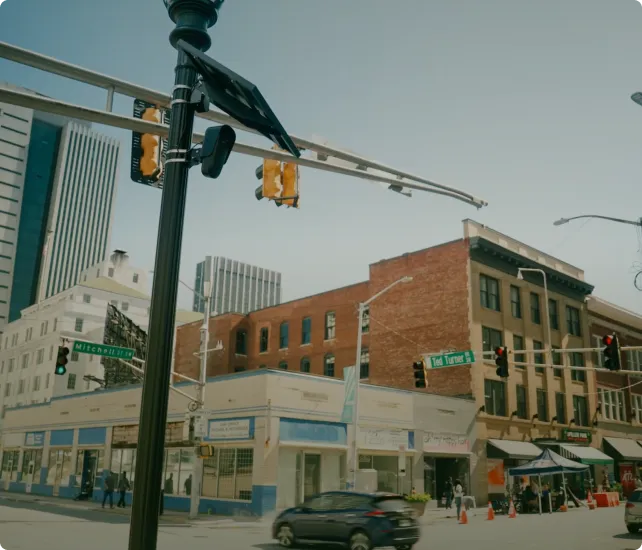
- Extend their existing Flock network of LPR cameras and fixed video systems, adding aerial coverage that activates automatically alongside ground-level detection.
- Support current agency technology, integrating with an existing drone program, Computer Aided Dispatch (CAD) system, or Real Time Crime Center workflow without requiring agencies to overhaul their current setup.
With Flock Alpha, you can expect:
- 60 mph flight speed and an average 86-second on-scene arrival
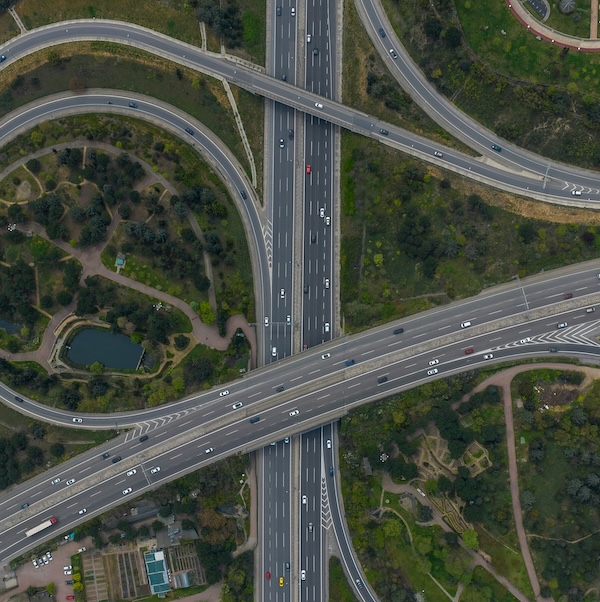
- 50 square miles of coverage from a single dock
- License plate reader cameras that identify plates from 2,000 feet
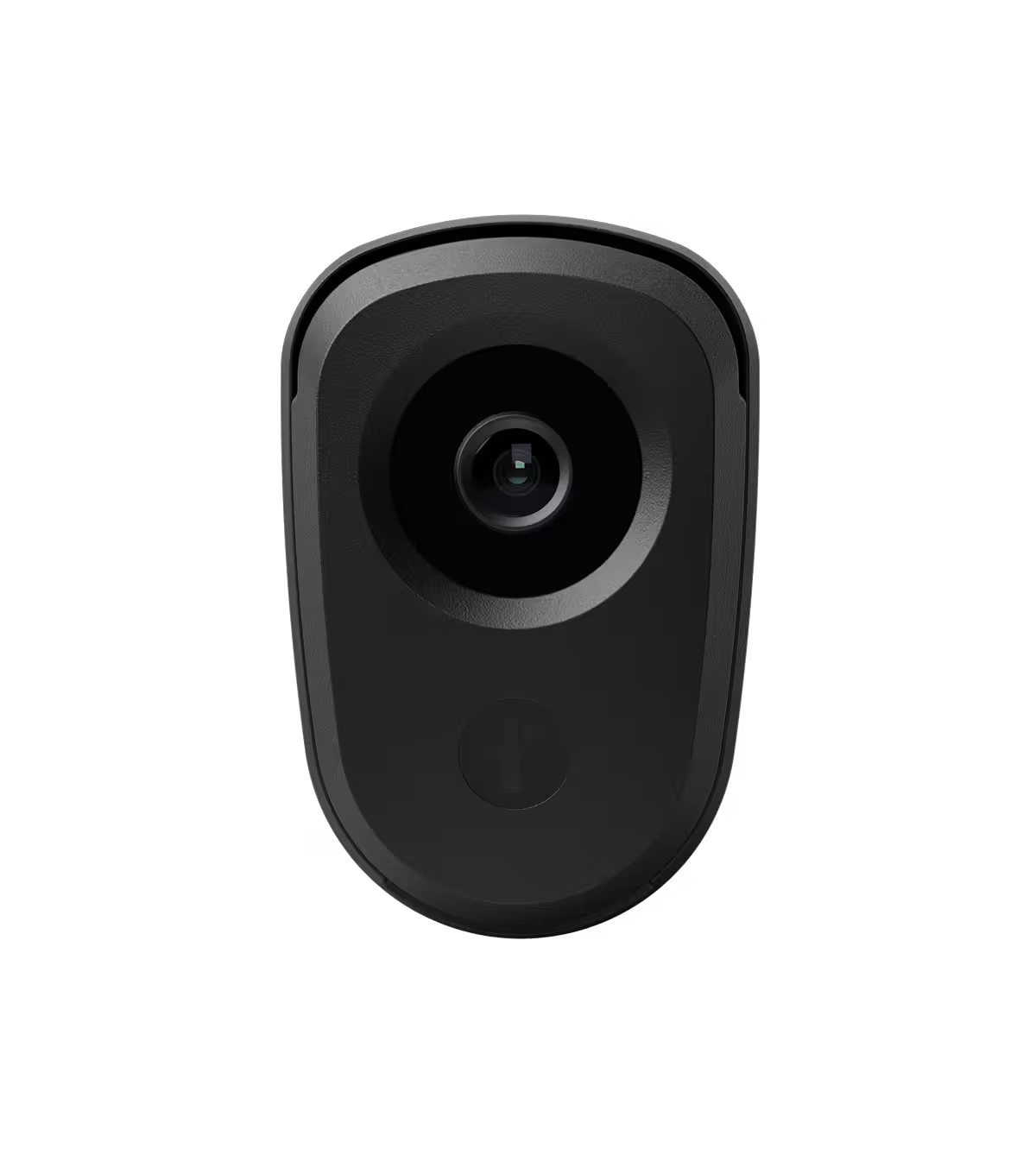
- Airborne license plate reader camera capability (unique to Flock)
- 45-minute real-world flight time with 90-second battery swaps
- Reliable connectivity at 400 feet, with four cellular modems and 15 antennas
- Native integration with the full Flock ecosystem
2. DJI Matrice 4 Series
Best for: Smaller agencies with ongoing emergencies and multi-mission operations.
DJI’s Matrice 4 Series includes the Matrice 4T, a thermal camera drone that can support large-scale firefighting or search-and-rescue operations.
The Matrice 4 Series includes:
- An 8-antenna system, solid bitrates, and extended bandwidth for stable images.
- Flight times up to 49 minutes and a transmission range of up to 25 km.
- AL1 Spotlight to align illuminated areas to the camera’s viewpoint.
- Route preview functions to streamline operations.
If your public safety team coordinates with multiple organizations, such as forestry or mining, this field-tested drone could be a good choice for broad public-safety initiatives.
3. Skydio R10
Best for: Agencies seeking autonomous indoor or close-quarters flight.
The Skydio R10 was made to work in smaller spaces, such as hallways and stairwells. The device features protective propeller guards and automated backtracking features to safeguard both the drone and its immediate surroundings.
The R10 features:
- 4K low-light camera with a 1-inch sensor and 180° pitch gimbal
- Automated path backtracking
- Built-in two-way audio (82 dB speaker and microphone)
- Perch Mode for up to 3 hours of stationary streaming
Skydio R10’s AI navigation is an excellent option for SWAT operations, fire inspections, or building searches. With pilot-assist autonomy, you can reduce operator workload during complex missions, or use the perch mode to park the drone for up to 3 hours of streaming video.
4. Autel Robotics EVO Max 4T
Best for: Quick-launch missions such as crash response, search-and-rescue, or perimeter sweeps.
Autel Robotics EVO Max 4T is a thermal camera drone that can operate in extreme environments. With a 42-minute flight time, advanced sensors, and 3D flight paths, it can be used to quickly assess anything from subway tunnels to dense forests.
This drone features:
- 3D scene recreations
- 720-degree obstacle avoidance
- Measurement coordination up to 0.75 miles
- AI target recognition
- 15 km transmission range
The Autel Robotics EVO Max 4T can monitor large spaces across rapidly changing environments. It enables firefighters, law enforcement, and search and rescue missions to automatically identify and track moving targets, including vehicles and people.
5. Parrot Anafi USA
Best for: Agencies requiring NDAA-compliant equipment for sensitive government operations.
The Parrot Anafi USA was designed for the U.S. Army and made available to the wider public. It has no fly-zone limitations, giving operators more freedom to fly wherever they need.
Notable features include:
- 32-minute flight time
- Observation range up to 2 km
- Thermal detection up to 40 m away
- Flight ready in 55 seconds
Parrot Anafi USA is NDAA-compliant and can be a good choice for sensitive operations, including search-and-rescue or disaster response.
Create a safer community with Flock DFR
The right drone will improve public safety without violating a community’s boundaries. Instead of replacing emergency responders, they integrate with your existing technology to support your team’s larger efforts.
If you want to unify ground security with aerial monitoring, Flock Alpha gives you the perspective to effectively handle even the most high-stakes situations. When you integrate our drones with tools like license plate readers and video cameras, you get comprehensive coverage from every angle.
See Flock DFR in action: Book a demo today.
FAQs
What is the best public safety drone in 2026?
For agencies building or expanding a drone-as-first-responder program, Flock Alpha stands out. With an average on-scene arrival time of 86 seconds, multi-sensor imaging that combines HD optical zoom, thermal, and low-light capability in a single payload, and native integration with license plate reader camera networks and dispatch systems, Flock Alpha delivers speed, visibility, and operational continuity from day one. The best drone for your agency ultimately depends on your mission requirements, existing infrastructure, and integration needs.
How are public safety drones different from commercial drones?
Public safety drones prioritize encrypted communications, compliance support, durable hardware, and integration with emergency systems. They are designed for high-stakes environments rather than recreational or industrial use alone.
Do drones replace traditional police or fire response?
No. Drones provide aerial intelligence before responders arrive, helping teams deploy safely and efficiently rather than replacing boots-on-the-ground operations.
What features matter most in a public safety drone?
Agencies should prioritize thermal imaging, zoom capability, secure cloud storage, flight reliability, autonomous launch options, and seamless integration with dispatch, mapping, or evidence management platforms.


Protect What Matters Most.
Discover how communities across the country are using Flock to reduce crime and build safer neighborhoods.