
.webp)




How to Break the Cycle of Recurring Safety Concerns and Property Damage at Your Parks
Recurring safety concerns and property damage don't have to become an accepted part of park operations. Greater visibility can help Parks departments identify what's happening in hard-to-reach areas, respond more effectively, protect public assets, and make more informed decisions about where to invest staff time and resources.

If you oversee parks and recreation facilities, you can probably name the locations that generate the most work without opening a spreadsheet.
You know the restroom that regularly needs repairs, the playground that keeps showing up on maintenance reports, the trailhead that generates recurring complaints, the athletic facility where damage seems to reappear every season, and the remote area of the park where safety concerns keep resurfacing. They're often the places where staff aren't present, incidents happen after hours, or the terrain makes it difficult to install traditional security infrastructure.
These locations have something else in common: they become repeat work orders or safety concerns, ongoing expenses, and eventually recurring budget conversations, forcing departments to continually decide where limited staff time and resources can have the greatest impact.
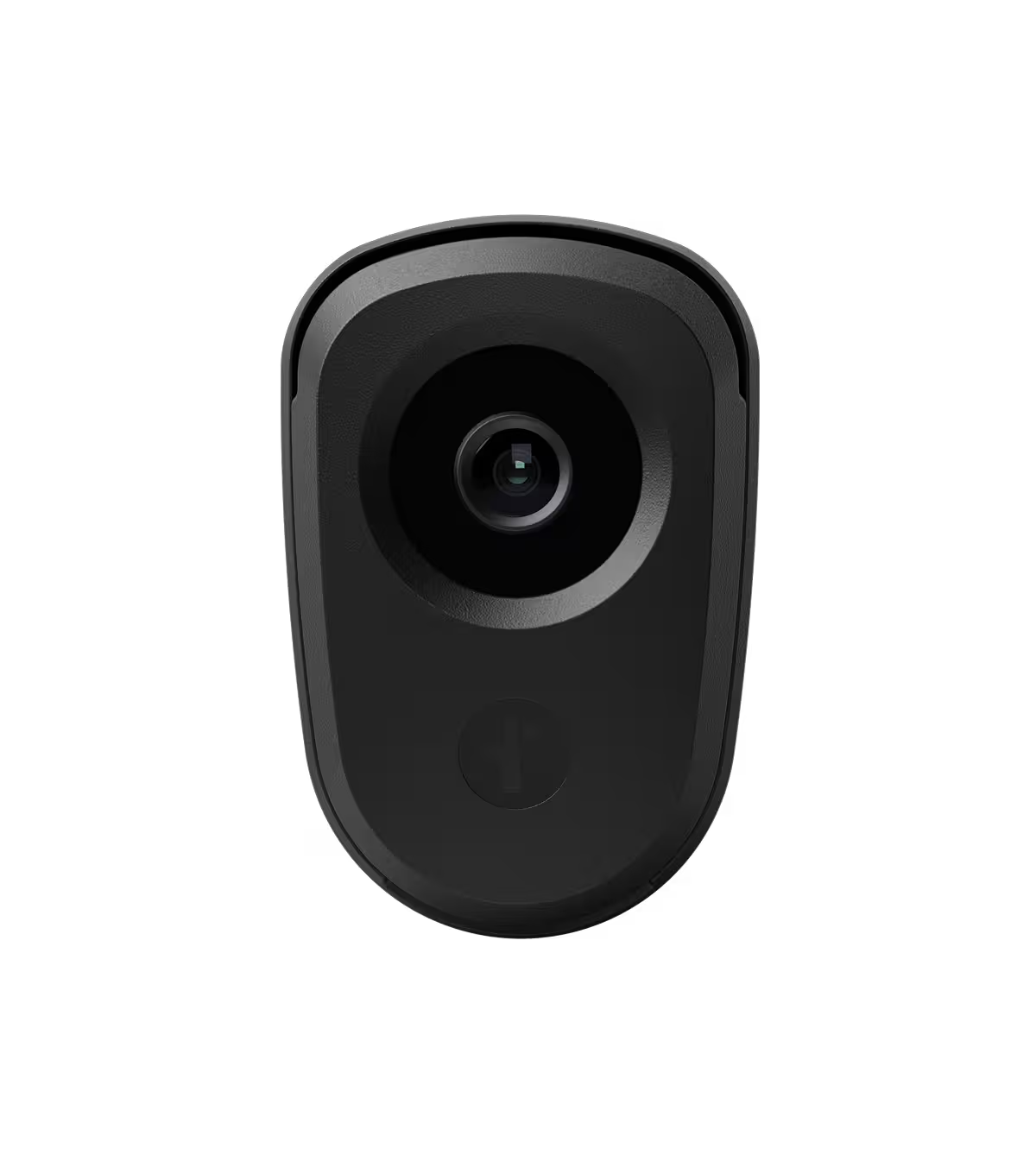
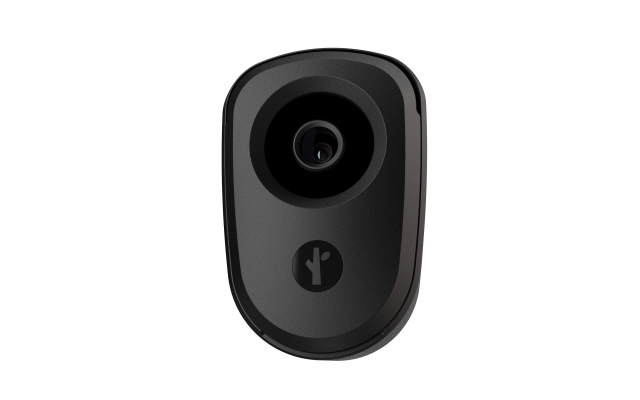
The Castle Rock Police Department faced a similar challenge at a hilltop park with a popular zip line. The location generated frequent medical calls, but with no power or internet at the top of the ridge, there was no practical way to install a traditional camera. By extending visibility into a location that had long been difficult to cover, first responders gained live awareness before arriving on scene and broader understanding of activity across the park. A solar-powered, wireless dual-lens PTZ Flock camera made that deployment possible despite the lack of traditional infrastructure.
For many parks, the biggest blind spots are also the most difficult places to reach. When power and internet aren't available, traditional cameras often aren't an option, leaving repeat vandalism, maintenance issues, and safety concerns without the visibility needed to understand what's really happening. That's beginning to change as solar-powered, wireless cameras make it possible to extend visibility into places that once remained blind spots.
When Safety Concerns and Damage Become Routine
Departments, budgets, and expectations may adapt, but every incident carries a cost beyond the safety risk or the repair itself.
Facilities may close temporarily. First responders or maintenance teams are pulled away from other priorities. Residents encounter spaces that don't reflect the experience your department is trying to create. Over time, persistent problems can shape how the public perceives the quality and reliability of community assets.
This challenge isn't unique to your community. Parks agencies across the country continue to deal with safety concerns, vandalism, illegal dumping, and property damage that strain already-limited budgets.
In Michigan, officials in the Village of Ubly cited recurring vandalism and illegal dumping as reasons for adding cameras at public facilities. In San Francisco, a pattern of vandalism of public art and community assets at Sunset Dunes Park led to restoration efforts and increased protective measures. These incidents may differ in scale, but they point to a common reality: these problems rarely resolve on their own.
Parks Directors Need Relief From Recurring Problems
Parks Directors need a practical path forward to reduce recurring problems.
Most parks weren't built with security infrastructure in mind. They don't have fiber or internet service, and some don't have readily available power. Others sit far from municipal buildings and existing networks.
The process for monitoring remote facilities may involve construction, permitting, internet service, trenching, and ongoing maintenance. For departments already balancing limited budgets and staff resources, those requirements often make the idea impractical before it’s ever seriously considered.
As a result, many departments operate under the reasonable assumption that if there's no power and no internet, cameras aren't an option.
How Parks Departments Can Address the Challenge
Flock helps Parks Departments extend visibility into remote facilities, trailheads, parking lots, athletic complexes, and event venues without the infrastructure projects many leaders assume are required.
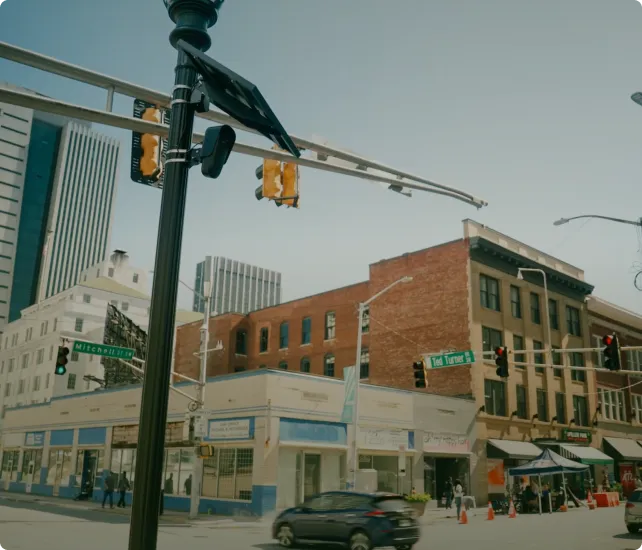
LPR and video give Parks departments greater awareness of hard-to-cover locations. Solar-powered cameras provide visibility into what’s happening across remote facilities, while license plate readers add searchable vehicle intelligence that helps teams understand what vehicle was involved and support investigations. Together, they create a more complete understanding of activity, helping departments move beyond isolated pieces of information.
When an incident occurs, Parks teams can identify when it happened, review activity around the location, and understand what happened before, during, and after the event. When paired with license plate readers at park entrances or nearby roadways, teams can also identify vehicles associated with recurring incidents and provide stronger evidence to law enforcement that may help move investigations forward. Over time, departments can also use traffic data to better understand how facilities are being used and where resources can have the greatest impact.
Better visibility and coordination with law enforcement can help reduce recurring problems, protect community assets, strengthen investigations with more complete context, and provide the information teams need to make more informed operational decisions every day.
Explore How Flock Supports Parks & Recreation
Learn how Parks and Recreation departments are using Flock to protect facilities, improve visibility, and make more informed operational decisions.
Explore Flock for Parks & Recreation
Photo Credit:


Protect What Matters Most.
Discover how communities across the country are using Flock to reduce crime and build safer neighborhoods.