
.webp)



.jpg)




The Top Skydio Competitor: How DFR Systems Really Compare
Learn how Skydio fits into modern law enforcement drone programs and why many agencies now prioritize full-service, integrated systems like Flock Safety.

Skydio is frequently top of mind for law enforcement agencies evaluating drone programs. Well-marketed AI-powered autonomy features and Blue UAS certification often drive early interest as agencies assess compliance and technical capability.
Despite that initial interest, many departments explore alternatives as they move from technical evaluation to operational planning. In practice, Skydio's feature set doesn't always align cleanly with public safety-specific use cases or long-term operational needs.
At the same time, few true one-to-one competitors exist for the Skydio X10 and for complete Drone as First Responder (DFR) systems, which makes evaluation more challenging.
Effective DFR platforms require more than a capable aircraft. Long-term success depends on integration, compliance, support, and community trust, not just autonomous flight.
Key takeaways
- Mission fit, not just autonomous flight, determines whether a drone platform supports real-world public safety operations.
- Lifecycle costs often extend beyond hardware and should include software, training, waivers, maintenance, and support.
- Integration with CAD, LPR, RTCC, and evidence systems is critical for operational efficiency.
- Successful DFR programs balance automation with human oversight to meet policy, compliance, and trust requirements.
- Purpose-built public safety platforms typically offer stronger alignment for sustained DFR operations than multi-industry drone solutions.
Why agencies look for Skydio alternatives
Skydio offers powerful autonomous flight features, some of which are helpful in law enforcement contexts. But when agencies look beyond autonomy and evaluate DFR programs as full operational systems, different requirements begin to surface.
Here are a few of the most common factors agencies consider:
Mission fit
Mission fit is often the first reason agencies look beyond Skydio. Because Skydio isn't focused exclusively on law enforcement, its products and platform don't always match the operational needs of public safety drones.
Skydio's marquee capability is the autonomous drone, built around autonomous navigation such as routing through dense urban environments with obstacle avoidance. That approach prioritizes low-altitude flight, where avoiding buildings and street-level obstacles is critical.
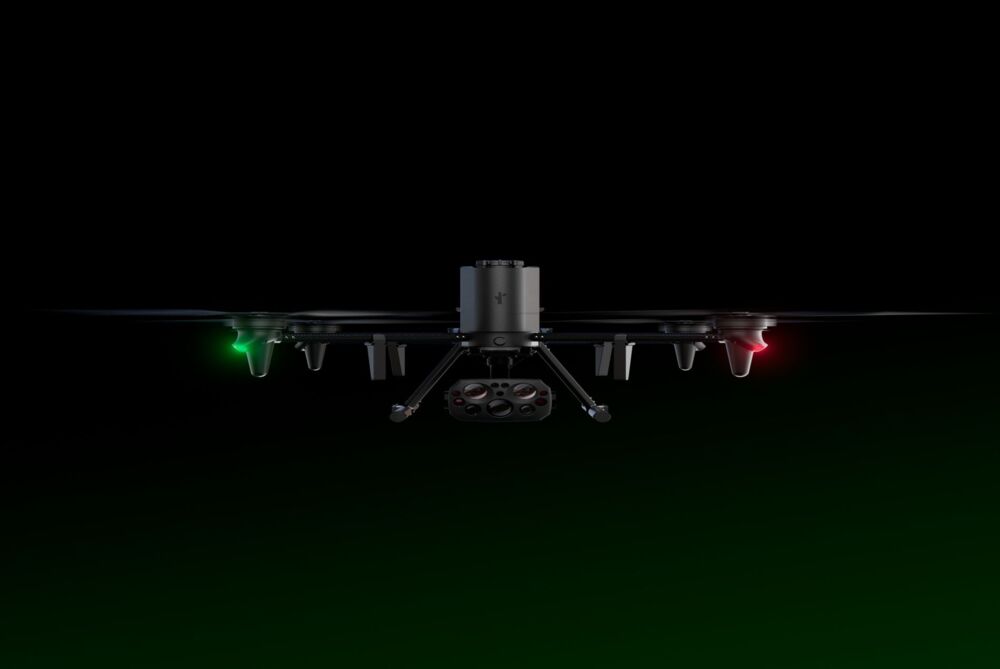
Other solutions, including Flock DFR, prioritize mission autonomy rather than flight autonomy alone. Flock Alpha drones operate at higher altitudes with more effective zoom, reducing the need to devote processing power to navigating winding streets while still delivering actionable visibility.
The Skydio X10 is also designed as a multi-purpose drone for a wide range of industries. Law enforcement agencies evaluating DFR programs typically need a platform optimized for high-quality aerial photography that supports rapid response and broad coverage, not tools built to perform bridge inspections or generate 3D models.
As agencies assess mission fit, they often prioritize capabilities such as:
- High-resolution thermal imaging
- Powerful zoom
- Rugged build quality
- Rapid deployment workflows
For many departments, a DFR platform purpose-built for law enforcement is a better fit. Flock DFR is a complete system of drones, base stations, software, and services, including training, waivers, and SOPs, designed to support day-to-day public safety operations.
Learn more about how Flock DFR helps law enforcement agencies deploy purpose-built public safety drones as part of a complete, policy-ready DFR program.
Budget and lifecycle costs
The price point for Skydio's hardware may look attractive at first glance, but it rarely reflects the full cost of operating a DFR program. While the hardware may be affordable upfront, it isn't an all-in-one solution with all required services included.
As agencies add software, support, and operational components, total costs can increase over the lifecycle of the program, particularly for departments seeking broad or near-continuous coverage.
Integration requirements
Agencies need drones that fit into larger ecosystems of hardware and software, including CAD, LPR, and real-time crime centers (RTCC). In this area, Skydio has limitations: drones and docks are its only hardware products.
In contrast, Flock offers license plate readers (LPRs), stationary cameras, audio detection sensors, and an operating system that connects all Flock hardware. The FlockOS RTCC connects natively across Flock products and supports integrations with third-party technology, enabling a more unified operational view.
Policy and trust needs
Successful adoption of drone technology, particularly DFR systems, depends on community transparency and policy compliance. Both require clear, turnkey support from the DFR provider.
While Skydio does offer support in these areas, the cost and scope of that support are not always included upfront. Agencies may encounter à la carte pricing models that make long-term planning and budgeting less predictable.
Some public safety agencies have also expressed frustration with industry-level lobbying efforts that limit access to certain tools from overseas drone manufacturers, without providing alternatives that fully meet operational needs.
De-escalation + triage
Effective drone programs need to deliver eyes on scene in seconds, not minutes. Flight time plays a direct role in both how quickly a drone can arrive and how long it can remain overhead, while the on-scene visual must be clear and detailed enough to help agencies right-size responses and clear lower-priority calls without dispatching units.
Compared to Flock DFR, the Skydio X10 typically takes longer to reach incidents and provides more limited camera and zoom capabilities, which can reduce visibility into conditions on the ground.
Together, slower response times and a less capable payload can limit effectiveness in de-escalation, triage, and response decision-making.
Human-in-the-loop
Autonomy is an important option, but full autonomy isn't always the right fit for law enforcement operations. To align with FAA regulations and federal, state, local, and department policy, many agencies want a human in the loop.
For these agencies, automated launch with pilot oversight provides a better balance than fully autonomous operation.
Flock DFR: The top Skydio competitor for law enforcement agencies
Flock offers a complete DFR program designed specifically for law enforcement and public safety. Flock DFR is a clear alternative to Skydio, with the focus, depth, and operational support agencies need to sustain DFR programs over time.
Flock DFR includes Flock Alpha drones, DFR base stations, and an integrated software suite that works natively with other Flock hardware, including LPR cameras and audio detection.
Law enforcement agencies choose Flock DFR for several key reasons:
- Integrated ecosystem: Works with Flock LPR and audio detection to support automated, cross-tool workflows.
- Turnkey support: Waiver templates, onboarding, SOPs, and training are included.
- Community trust: Policy templates and engagement resources help agencies build and maintain public support.
- De-escalation by design: An aerial perspective before arrival helps right-size responses and supports officer safety.
- Automation with oversight: Automated (not autonomous) launch with pilot control available at any time.
- Operational flexibility: Two-dock options (rapid battery swap or rapid contact charging) help maximize uptime.
- Works for varied agency sizes: Designed so sworn officers or trained civilian pilots (Part 107) can support drone operation across departments of different sizes.
- Simplified procurement: A transparent, bundled subscription covers hardware, software, and support.
Flock DFR drones fly faster, higher, farther, and longer than the competition, and are equipped with advanced cameras and sensors that support clear visibility at a distance.
Flock DFR is built to complement an existing UAV program (drones in the trunk), not replace it entirely. For smaller departments without dedicated drone pilots or drone operations staff, Flock DFR provides significant value and rapid response without the need for full-time pilots. Trained officers or civilians, supported by Flock, can handle manual drone piloting when needed.
Learn more about how Flock DFR fits into a scalable, integrated DFR program for law enforcement agencies.
Key factors when evaluating any Skydio competitors
If your agency is evaluating DFR system capability, you may find that the drone market is crowded, but most available options aren't full DFR systems. Only a small number of drone companies offer solutions designed specifically for sustained DFR operations.
Standalone "drone in the trunk" programs and emergency response drones still have an important role, but they are meant to complement DFR systems, not replace them. As you compare Skydio alternatives, these evaluation criteria can help keep the focus on what matters most for law enforcement and DFR programs.
Mission requirements
Start by identifying how your agency plans to use drones, then build mission requirements from there. Search and rescue, crime scene documentation, and DFR-style deployments are all valuable use cases, but each requires a different mix of capabilities.
DFR deployment scenarios (where drones launch rapidly from docking stations in response to predefined criteria or manual piloting) may include:
- Vehicle-related crimes (LPR hot-list hits)
- Retail and organized retail theft response
- Fire support (ingress and egress, hydrants, hot spots, victim risk)
Once mission requirements are clear, agencies can compare those needs against Skydio and other solutions to identify the best fit.
Data security and compliance
One of the most significant differentiators between consumer drones and commercial drones designed for law enforcement and public safety is data security. Compliant data practices are a must-have. Data capture, transmission, storage, and even data analysis must all protect privacy and public safety. This includes:
- Encrypted communications
- CJIS-compliant storage
- Audit trails
Some vendors emphasize security and NDAA compliance more than others. Agencies should look for CJIS-aware workflows, audit logging, and clearly defined retention policies.
Stronger solutions also include policy templates and public transparency tools as part of the drone or DFR system, rather than offering them as add-ons.
Integration and ecosystem support
Skydio drones are offered with docks and the software used to operate them, reflecting a drone-focused approach rather than a broader public safety ecosystem. By contrast, other options support a wider range of integrated tools.
Stronger alternatives work seamlessly with dispatch, evidence platforms, and complementary technologies such as LPR cameras. LPR triggers (geolocation + vehicle image → automated route preparation) can help route drones more quickly. Integrations with CAD and evidence platforms also support single-pane-of-glass operations, simplifying operational control from the field or a real-time crime center.
Lifecycle cost and vendor support
Agencies should also consider long-term value alongside long-term costs. Skydio and some other vendors take an à la carte approach to pricing, even for components and services that are effectively required to operate a DFR program.
Training, maintenance, assistance with waivers and SOP development, and repairs or replacements are all part of implementing and sustaining a DFR system. When comparing prices, agencies should look for apples-to-apples comparisons that account for these essentials and be cautious of pricing models that obscure costs or place critical features behind higher software tiers.
Take the next step toward safer, integrated drone programs
Skydio may be an attractive first option for law enforcement agencies exploring a DFR program, but it isn't the only choice. Agencies that evaluate alternatives (especially solutions built for full integration, a law enforcement focus, and long-term support) may find better alignment with their mission requirements and operational goals.
Flock DFR is designed for agencies seeking a holistic approach to DFR. Rather than offering a standalone device, Flock DFR provides a turnkey program that bundles essential functions and integrates across a connected set of public safety tools, including third-party systems. Built-in training, waiver assistance, and community trust resources help agencies implement DFR programs in a structured, policy-ready way.
To see how Flock can support your agency's DFR goals, explore Flock DFR or request a demo.
FAQs
Is Skydio a DFR system or just a drone manufacturer?
Skydio manufactures drones and docking systems that can support DFR-style deployments. However, agencies evaluating full DFR programs should assess whether additional services, integrations, policy support, and operational tools are required to build a complete system.
What should agencies prioritize when comparing Skydio competitors?
Agencies should evaluate mission alignment, camera payload capability, flight time, integration with existing public safety systems, lifecycle cost, compliance support, and vendor training resources. Looking at the full operational model is more important than comparing aircraft specifications alone.
Are there many true alternatives to Skydio for DFR programs?
The drone market is crowded, but relatively few vendors offer purpose-built, end-to-end DFR systems designed specifically for sustained public safety operations. Many options focus on standalone aircraft rather than integrated programs.
How important is integration for a DFR system?
Integration is critical. DFR platforms that connect with CAD, LPR systems, RTCC environments, and evidence management tools can improve response speed, situational awareness, and workflow efficiency. Isolated drone systems may create operational silos.


Protect What Matters Most.
Discover how communities across the country are using Flock to reduce crime and build safer neighborhoods.