
.webp)









University of St. Thomas Launches a Connected Campus Safety Program with Drone as First Responder
University of St. Thomas is rolling out a connected campus safety program centered on DFR and LPRs to support faster response, better situational awareness, and clear transparency measures.

The Problem: Campus safety teams need faster response times, better situational awareness, and tools that support both effectiveness and transparency
The University of St. Thomas (UST) recognized the growing need for a more connected and proactive approach to campus safety. Traditional response methods can limit officers' ability to access critical information quickly in fast-moving situations, making it harder to assess incidents and coordinate effectively.
Campus leaders also faced the challenge of balancing enhanced security measures with the community's clear expectations for transparency and privacy. As safety demands evolve, universities are under increasing pressure to adopt tools that improve response while maintaining trust.
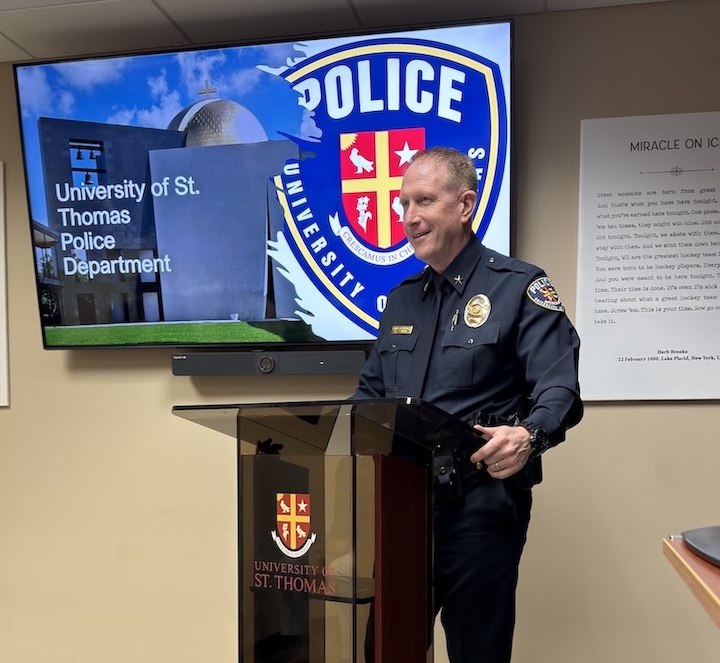
“A university campus should be a place where people can learn, teach, work, and gather with confidence,” said UST Police Chief H.E. Jenkins.
The Solution: A connected safety ecosystem combining Drone as First Responder (DFR) and license plate readers (LPRs) for faster, more informed response
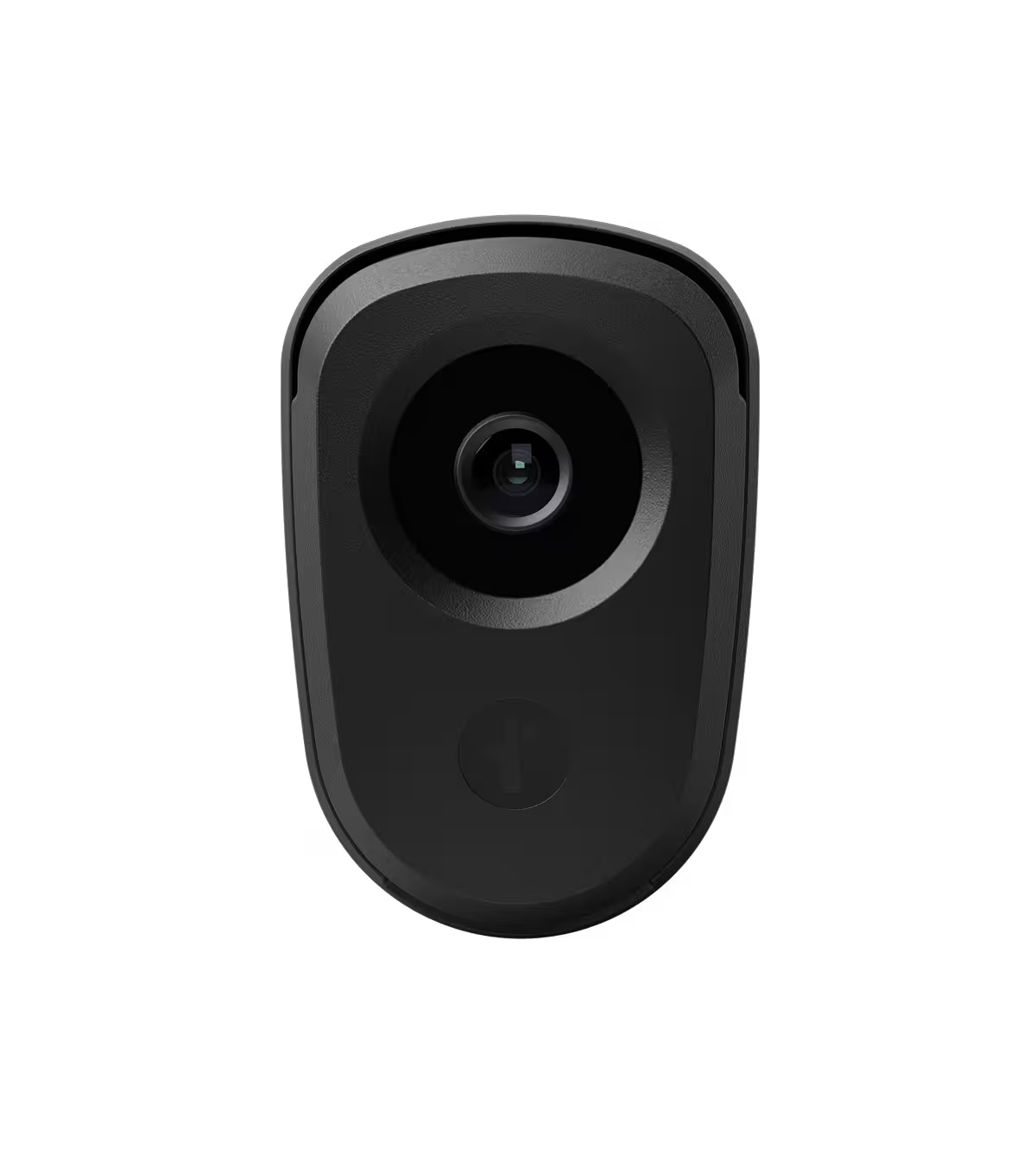
UST launched a technology-driven safety program centered on Flock’s Drone as First Responder (DFR) and License Plate Readers (LPRs), creating a unified system designed to support both prevention and response.
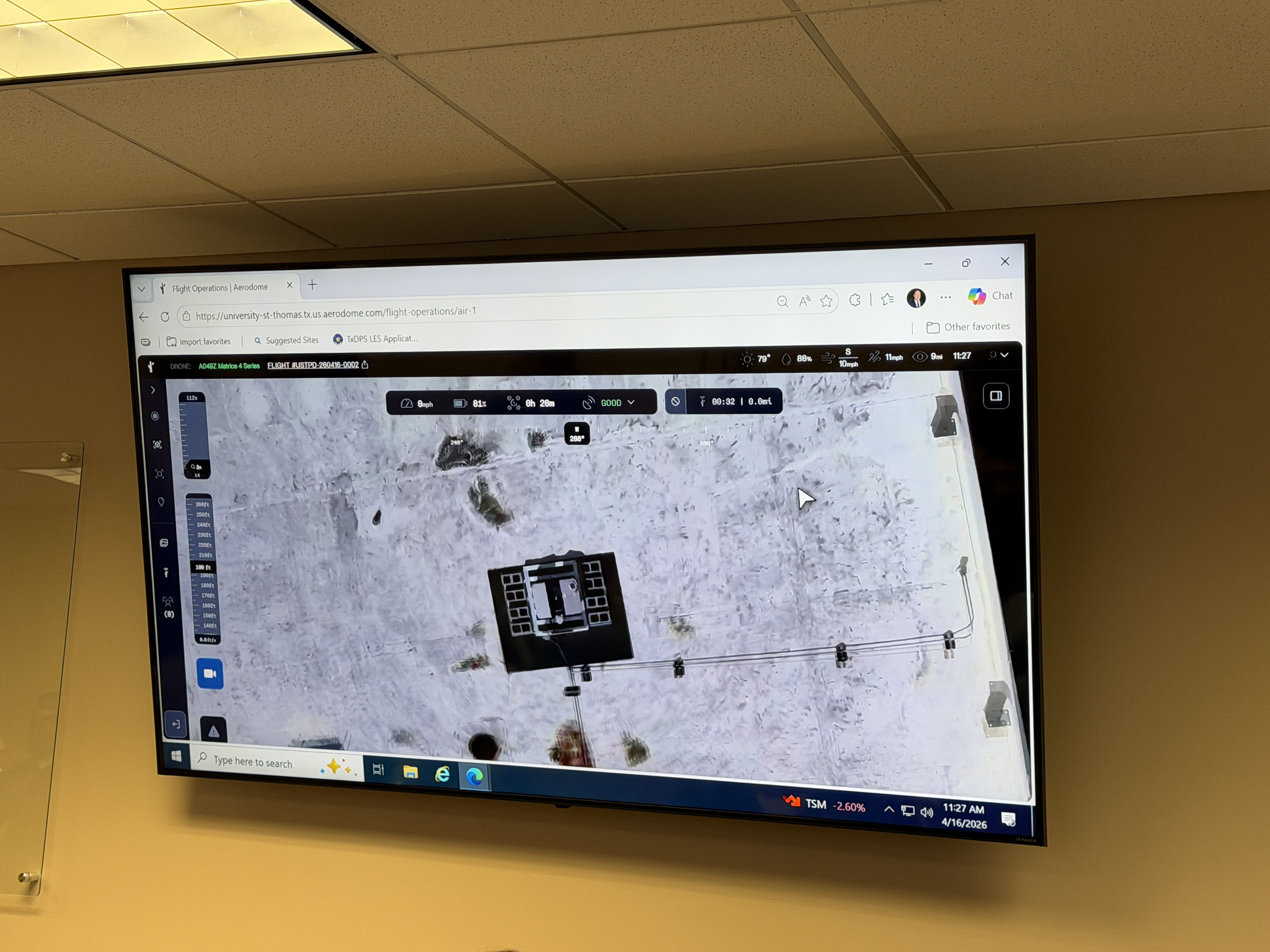
Flock’s DFR system can deploy rapidly from its dock when dispatched, sometimes arriving on scene in as little as 85 seconds, often ahead of officers. This early aerial presence provides real-time situational context, helping responders assess incidents and determine the best course of action.
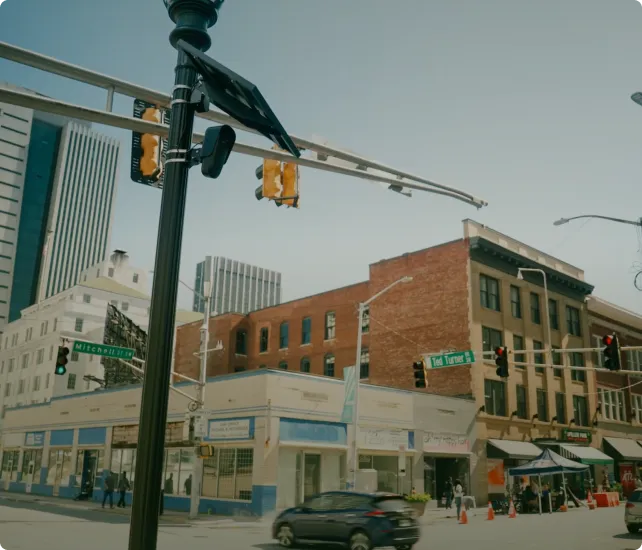
In parallel, LPRs installed at campus entry points help identify vehicles relevant to investigations, generating leads that support timely follow-up and response. Together, these tools create a more coordinated and proactive safety strategy.
The system also supports collaboration beyond campus by enabling information sharing with local law enforcement partners when needed, in alignment with applicable policies and laws.
Transparency and privacy are core to the program’s design. Drone deployments occur only in response to specific calls for service or alerts, and operations follow strict policy guidelines. Cameras remain oriented toward the horizon during flight and only focus downward at the incident scene. Each flight is logged and may be shared through a public transparency portal to reinforce accountability.
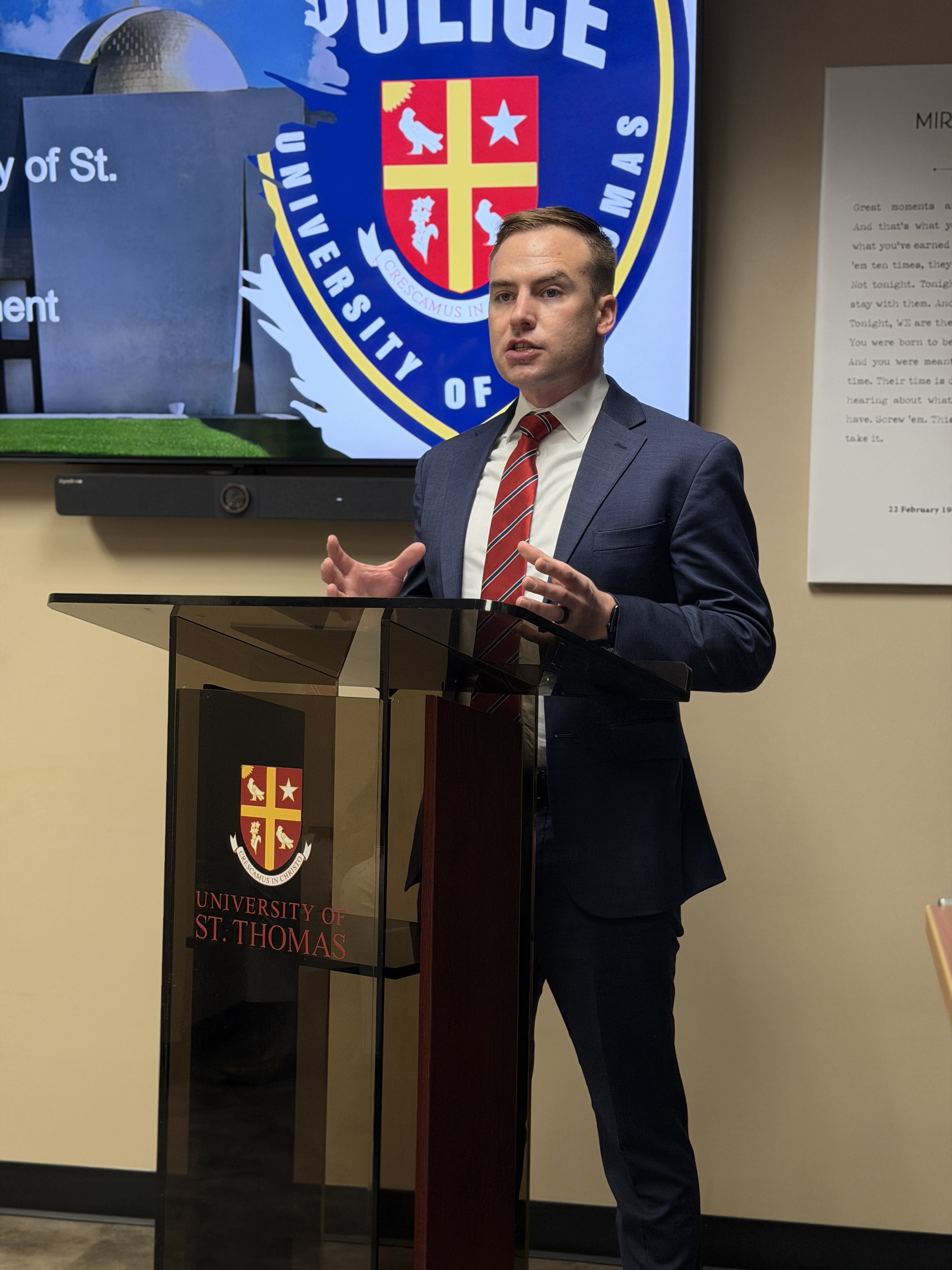
“This is not about technology for technology’s sake,” Chief Jenkins said. “It is about giving our officers better tools to serve this campus, respond faster, and keep people safe.”
The Outcome: Improved response speed, stronger coordination, and a more transparent, trust-centered approach to campus safety
By implementing a connected ecosystem of DFR and LPRs, UST has strengthened its ability to respond quickly and make informed decisions during critical moments. Early aerial insight and real-time data help officers act with greater clarity and coordination.
The program enhances not only on-campus safety but also regional collaboration, supporting multi-agency responses when necessary. At the same time, its emphasis on transparency and clearly defined policies helps build and maintain community trust.
UST’s approach reflects a broader commitment to preparedness, equipping responders with the tools and information they need before and during incidents. By integrating speed, awareness, and accountability, the university is working toward a safer, more resilient campus environment where technology supports both safety and peace of mind.


Protect What Matters Most.
Discover how communities across the country are using Flock to reduce crime and build safer neighborhoods.