
.webp)







Why Vehicle Intelligence Matters
Discover how vehicle intelligence goes beyond license plates to reveal patterns, deter crime, and help communities and police solve cases faster.

The current administration has rescinded an estimated $500 million in grants, which may significantly affect policing initiatives. Combined with ongoing staffing shortages across the country, this has prompted law enforcement agencies to adopt tech-forward solutions that leverage artificial intelligence, including license plate reader (LPR) cameras.
These tools have become central for law enforcement investigations. Vehicles are often at the center of offenses like hit-and-run incidents and burglaries, and vehicle intelligence like make, model, and movement patterns provides critical support for investigations and case clearance.
Find out how Flock helps law enforcement agencies build stronger cases.
Key takeaways
- Vehicles are central to many crimes because they offer suspects mobility, concealment, and in some cases serve as weapons, making vehicle intelligence a critical investigative asset.
- Vehicle intelligence goes beyond license plate capture to include make, color, body type, and unique identifiers, helping investigators identify vehicles even when plates are missing or falsified.
- AI-powered tools like Flock Nova and FlockOS automatically surface connections across incidents, locations, and jurisdictions, which involves pattern recognition that would take investigators days to do manually.
- Vehicle intelligence supports the full investigative lifecycle: from real-time alerts when a vehicle of interest is spotted, to time-stamped evidence that strengthens cases in court.
- As staffing shortages and budget cuts strain law enforcement agencies, vehicle intelligence reduces manual workload and allows investigators to focus on high-impact leads.
Why vehicles are at the center of crime
Vehicles play a recurring role in criminal activity because they give suspects:
- Mobility: Vehicles allow offenders to easily approach their targets, leave scenes quickly, and target multiple locations in a short timeframe.
- Concealment: Vehicles provide cover for perpetrators and any possible weapons.
- Weaponry: Vehicles may function as instruments of harm in incidents such as deliberate hit-and-runs.
Traditional evidence collection methods, like witness statements and standalone cameras, often fall short. They may offer a general description of a vehicle, but they struggle to draw firm connections across multiple incidents.
Vehicle intelligence, on the other hand, transforms scattered vehicle data into actionable insights. It can surface vehicles that appear repeatedly across incidents, helping investigators identify patterns and connect cases that might otherwise seem unrelated. Intelligence tools like Flock Nova pull data from LPR cameras, including vehicle images, descriptions, and time stamps, giving investigators and lawyers a richer evidence base.
What vehicle intelligence means for law enforcement
Vehicle intelligence goes beyond license plate capture, including details like vehicle color and unique identifiers, which are particularly useful when plates are missing or fake. These systems can also help law enforcement identify connections between incidents across locations and times, surfacing patterns that standard security solutions tend to miss.
Here's a closer look at how vehicle intelligence supports law enforcement:
Identifying repeat offenders across multiple cases
When a vehicle appears across multiple incidents in different neighborhoods, vehicle intelligence can flag that connection, enabling departments to collaborate and build stronger cases. Manual evidence collection and review rarely surfaces these patterns at scale. Vehicle intelligence does it automatically.
These amplified insights can also help reveal whether a suspect appears to target specific types of businesses based on vehicle movements, which supports more informed resource allocation and patrol direction (e.g., directing more resources to identified high-risk areas), and more effective case building.
Supporting clearance rates with stronger evidence
Searchable vehicle evidence databases compile images and footage from LPR and security cameras, helping officers confirm vehicle presence at crime scenes and connect related incidents. This evidence base can also support prosecutors in court by providing objective, time-stamped data.
By connecting vehicles to incidents, AI-powered tools reduce the time investigators and prosecutors spend on manual case-building work.
Enhancing officer safety with better situational awareness
Vehicle intelligence gives officers more context before and during interactions. With a solution like Flock Nova, an officer conducting a traffic stop can access risk information, prior police calls, and investigations linked to the vehicle before approaching it. That context allows them to adjust their approach, request backup if needed, or make more informed decisions about timing and location, supporting officer safety and community safety.
Real-time alerts to act before crime escalates
Vehicle intelligence systems can send live notifications when a vehicle associated with an open investigation appears in a given area. If a Flock LPR camera spots a vehicle of interest in a high-risk area, it can trigger an alert to law enforcement through Flock’s HotList feature, helping law enforcement optimize response time.
HotList is available to private businesses and law enforcement. Private organizations can add vehicles to custom lists and connect their cameras to Flock's broader LPR network, extending coverage and streamlining coordination with law enforcement.
How agencies can put vehicle intelligence into practice
Vehicle intelligence has become a practical investigative tool, and its ability to automate evidence collection makes it especially valuable for agencies managing staffing shortages. Flock's solutions identify and connect vehicles to incidents with minimal manual input, freeing investigators to focus on high-impact leads.
Consider a real-world case: Flock’s vehicle intelligence helped investigators locate a kidnapped child by compiling LPR and video camera data from an apartment building. The system surfaced key details, including vehicle color and visible damage, helping investigators identify clues that led to locating the child within hours.
Manually reviewing all vehicle activity captured in the area could have taken days, and with a child’s safety on the line, every second counted. Flock’s solutions did the heavy lifting of surfacing vehicle intelligence so law enforcement could focus on developing a rescue plan.
Here’s how agencies can build vehicle intelligence into their operations for better, safer outcomes:
License plate reader cameras as the foundation
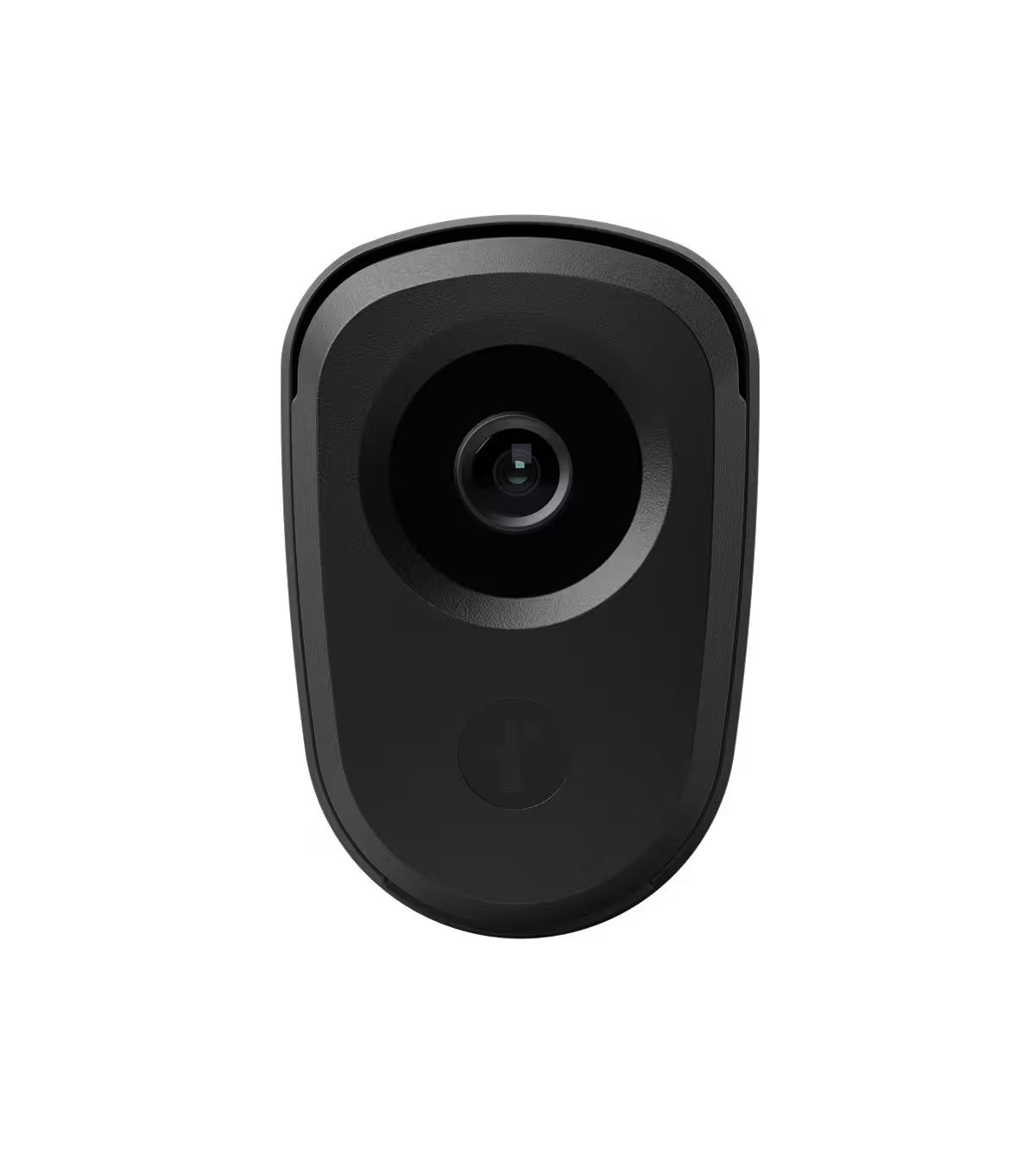
High-quality LPR cameras are the starting point. Beyond license plates, they capture vehicle make, color, body type, and distinguishing features, all of which help investigators identify connected vehicles, spot patterns, and link incidents.
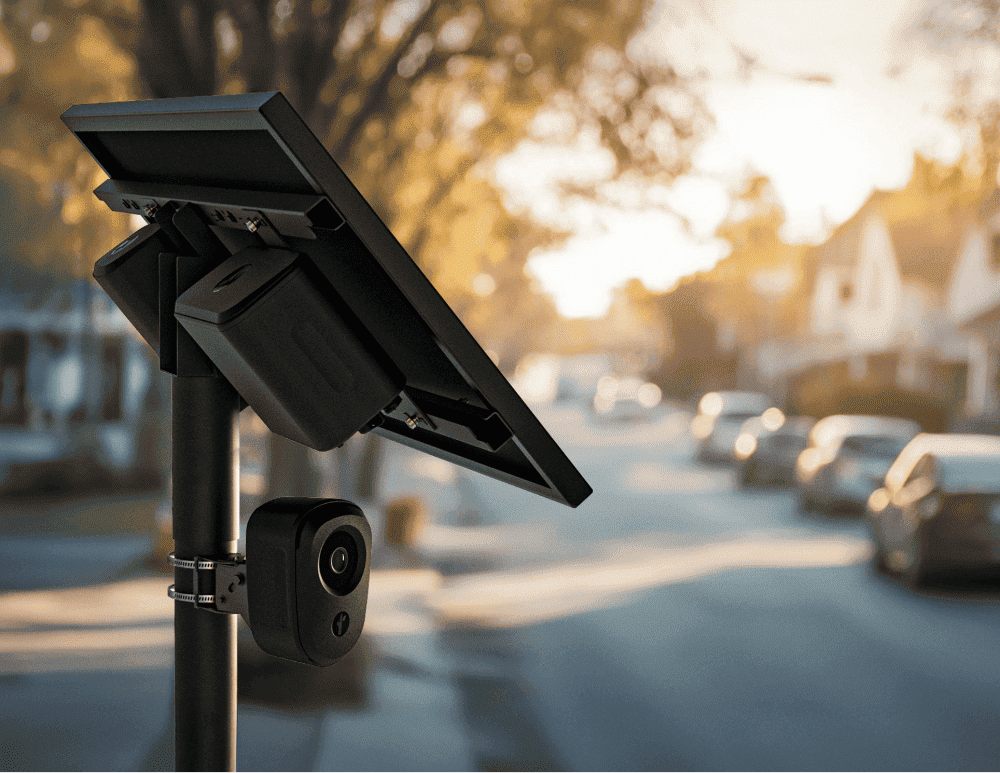
Flock's LPR cameras are infrastructure-free, requiring no wiring, complex IT setup, or server management. Officers can access data from virtually anywhere, including command centers and patrol vehicles, making them useful across investigations and routine traffic stops alike.
Linking vehicles to time, location, and activity
Using LPR cameras effectively can reduce manual labor for officers and improve case building, which is a win for investigators and the community alike. They can:
- Highlight patterns, such as vehicles visiting scenes multiple times, which may indicate premeditation.
- Show vehicle movement, including direction of travel, to support monitoring and suspect identification.
- Connect incidents across locations, helping investigators build accurate timelines.
Crime center integration
While LPR intelligence is inherently valuable, it can become even more helpful to investigations when it feeds into a real-time crime center (RTCC), like FlockOS.
With FlockOS, officers get a centralized view of data from LPR cameras alongside other Flock products, including video cameras and gunshot detection systems. This centralized view supports faster suspect identification and incident connection.
FlockOS connects multiple agencies, jurisdictions, and police department divisions, enabling coordinated remote efforts and reducing reliance on in-person data sharing.
Interagency collaboration with shared vehicle data
Vehicle intelligence supports cross-jurisdictional investigations by making data sharing straightforward. Flock Nova and FlockOS can surface when a vehicle appears in investigations across multiple cities, creating the conditions for interagency collaboration and stronger regional case-building. LPR cameras can also send real-time alerts when a vehicle of interest crosses into a new jurisdiction.
Community safety connection (off-duty LE/HOAs)
Vehicle intelligence isn't limited to active law enforcement. Off-duty officers, private businesses, and homeowners associations (HOAs) can use tools like LPR cameras and RTCCs to capture vehicle data and share it with officers to support investigations. They can also connect their cameras to local agency networks to extend coverage.
These connections support safer communities and strengthen relationships between law enforcement and the public. With Gallup reporting that only 51% of adults in the U.S. are confident in the police, solutions that bridge the gap between officers and their communities have tangible value.
Vehicle intelligence matters for the future of policing
As resources tighten and communities expect results, law enforcement agencies need tools that help investigators work more effectively. Vehicle intelligence supports that goal. It provides vehicle data that strengthens cases, improves situational awareness for officers in the field, and supports faster, better-informed decision-making.
Flock’s vehicle intelligence solutions empower law enforcement with comprehensive vehicle details, a public safety data platform (Flock Nova) that centralizes information for quick officer searches, and a real-time crime center (FlockOS) that connects systems and agencies. Together, these tools give investigators more to work with at every stage of a case.
Book a demo today to learn how to integrate vehicle intelligence solutions into your operations.
*A note on privacy and data use: Flock's LPR cameras capture data from public, plain-view locations, including roads and building entrances. The technology is designed to support investigations while respecting privacy and civil liberties.
FAQs
What is vehicle intelligence, and how is it different from a standard license plate reader?
A standard LPR camera captures license plate numbers, but vehicle intelligence goes further, collecting make, model, color, body type, and distinguishing features like visible damage. This broader dataset helps investigators identify and connect vehicles even when plates are obscured, missing, or fake.
How does vehicle intelligence help with cases that span multiple jurisdictions?
Tools like Flock Nova and FlockOS can flag when the same vehicle appears across incidents in different cities or counties, creating a shared evidence base that enables interagency collaboration. LPR cameras can also send real-time alerts when a vehicle of interest crosses into a new jurisdiction.
Can vehicle intelligence be used by organizations outside of law enforcement?
Yes. Private businesses, HOAs, and off-duty officers can use LPR cameras and connect to Flock's broader network through features like HotList. This extends coverage and allows community members to share relevant vehicle data directly with law enforcement to support active investigations.
How does vehicle intelligence support officer safety?
Before approaching a vehicle (during a traffic stop, for example) officers can use Flock Nova to access risk information, prior police calls, and any open investigations linked to that vehicle. That context allows them to make more informed decisions about timing, location, and whether to request backup.
How does Flock's system handle privacy concerns?
Flock's LPR cameras are designed to capture data only from public, plain-view locations such as roads and building entrances. The technology is intended to support legitimate investigations while respecting privacy and civil liberties.


Protect What Matters Most.
Discover how communities across the country are using Flock to reduce crime and build safer neighborhoods.