
.webp)







Washington Court of Appeals Upholds Automated License Plate Readers as Constitutional
Washington’s Court of Appeals has reaffirmed that fixed-location license plate reader images on public roads are constitutional.

On January 29, 2026, Washington’s Court of Appeals (Division III) issued State v. Simonson, a decision that squarely reinforces what courts across the country have repeatedly recognized: a fixed-location automated license plate reader (ALPR, also referred to as LPR) image of a license plate on a public roadway is not the kind of surveillance that the Fourth Amendment (or Washington’s Constitution, Article I, Section 7) treats as a search.
For agencies across Washington using LPR to find stolen vehicles, locate missing people, and identify vehicles connected to violent crime, State v. Simonson is a clear, practical statement of constitutional principles, paired with an equally practical reminder about evidence handling and retention.
What happened in State v. Simonson? And what did the court uphold?
In State v. Simonson, law enforcement located the defendant (charged with possession of a stolen motor vehicle) in part due to a Flock LPR “hit.” The defense sought to suppress the evidence, arguing that LPR use was an unlawful search. The case also involved a dispute over evidence preservation: certain LPR images were not archived and instead were deleted under a 30-day retention policy.
The Court of Appeals refused to suppress the evidence, holding:
- No reasonable expectation of privacy exists in a license plate displayed on public roads, even when the plate is photographed by an automated system.
- An LPR photograph is analogous to an officer visually noting a plate and running a routine records check, which is a practice Washington courts have long found permissible.
- The court rejected comparisons to GPS tracking and cell-site location data – technologies that require a warrant – emphasizing that an LPR “simply record[s] the license plates of vehicles driven on public roadways,” unlike technologies that intrude on protected privacy interests.
This reflects the line most courts draw in Fourth Amendment analysis: discrete, fixed-location observations in public versus continuous, comprehensive tracking that can reveal intimate patterns.
What does State v. Simonson clarify about LPR in practice?
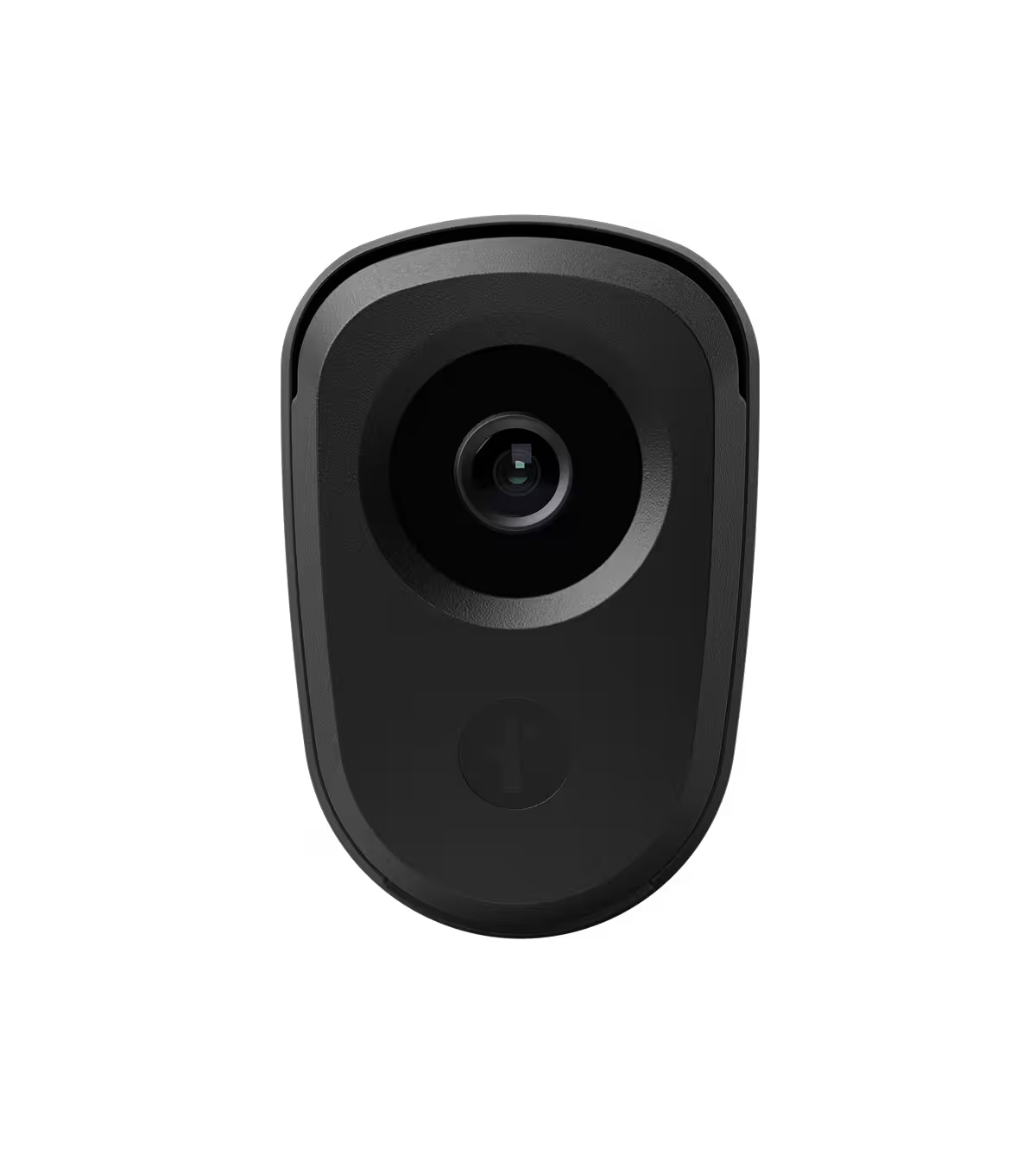
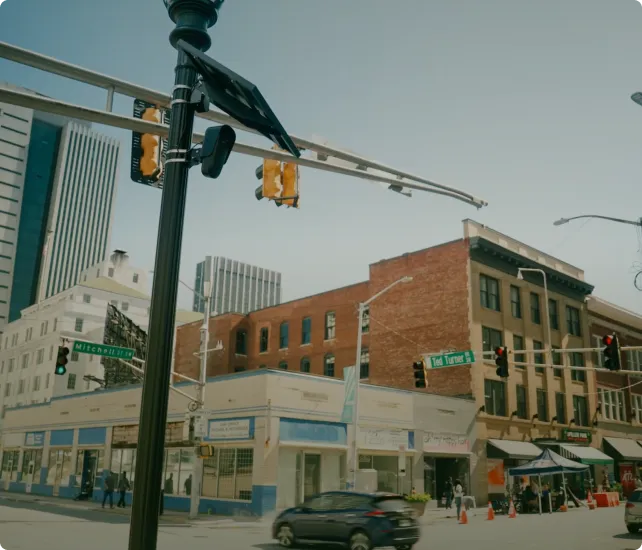
The State v. Simonson decision evaluates LPR as it is actually deployed, not as a speculative or futuristic tracking technology. The Washington Court of Appeals focused on the system’s real-world operation. It described a fixed camera capturing a still image of a license plate at a specific place and time, a plate number that state law requires to be openly displayed, and a data point that serves as an investigative lead rather than proof of identity or continuous monitoring. As the court made clear, an LPR observation remains subject to human review and verification and does not, by itself, establish who was driving or where a person traveled beyond the camera’s field of view.
That framing directly aligns with why privacy-by-design safeguards are foundational to Flock’s implementation, not just talking points. Retention limits, access controls, audit logs, and required search justifications are the very deployment details courts examine when distinguishing conventional public-space observation from technologies that risk compiling a comprehensive record of an individual’s movements.
State v. Simonson also reinforces an important operational point for agencies: even when an LPR observation is constitutional, questions can arise regarding evidence preservation and discovery if data is deleted in accordance with retention policies. The decision underscores the need for clear, consistently applied retention rules and sound evidence-handling practices, both to protect individual rights and to ensure investigative outcomes withstand judicial scrutiny.
What are real-life examples of crimes that LPR has helped solve in the Washington region?
Here are Washington-region examples reported publicly in the last year showing how LPR is used as a time-bounded investigative tool:
- Burien / King County: A Flock alert flagged a stolen vehicle connected to a homicide investigation, leading to a pursuit and the detention of a suspect.
- Kent (I-5 shooting): Witness information and the Flock camera system helped deputies locate the suspect SUV, resulting in an arrest and recovery of handguns.
- Lynnwood: During a period when cameras were operational, reporting cited that the system helped make arrests and recover 11 stolen vehicles in four months, illustrating the “rapid lead” value proposition in auto theft and related crimes.
These examples line up with Simonson’s framing: LPR is not continuous personal tracking. It’s a momentary observation that produces a lead, often in fast-moving public-safety scenarios.
What does State v. Simonson mean for constitutional, effective public safety in Washington?
State v. Simonson is a clean, direct statement from a Washington appellate court:
- There is no privacy interest in a plate displayed on a public roadway
- An LPR image is like an officer’s plain-view observation + records check
- LPR is not comparable to GPS/CSLI-style comprehensive tracking
LPR, deployed as fixed-location, point-in-time observation with strong governance, fits comfortably within constitutional boundaries while delivering real investigative value across Washington.


Protect What Matters Most.
Discover how communities across the country are using Flock to reduce crime and build safer neighborhoods.