
.webp)






Drone as First Responder Programs: How To Build Them Right From Day One
By tapping ‘Submit', you are agreeing to Flock Privacy Notice.
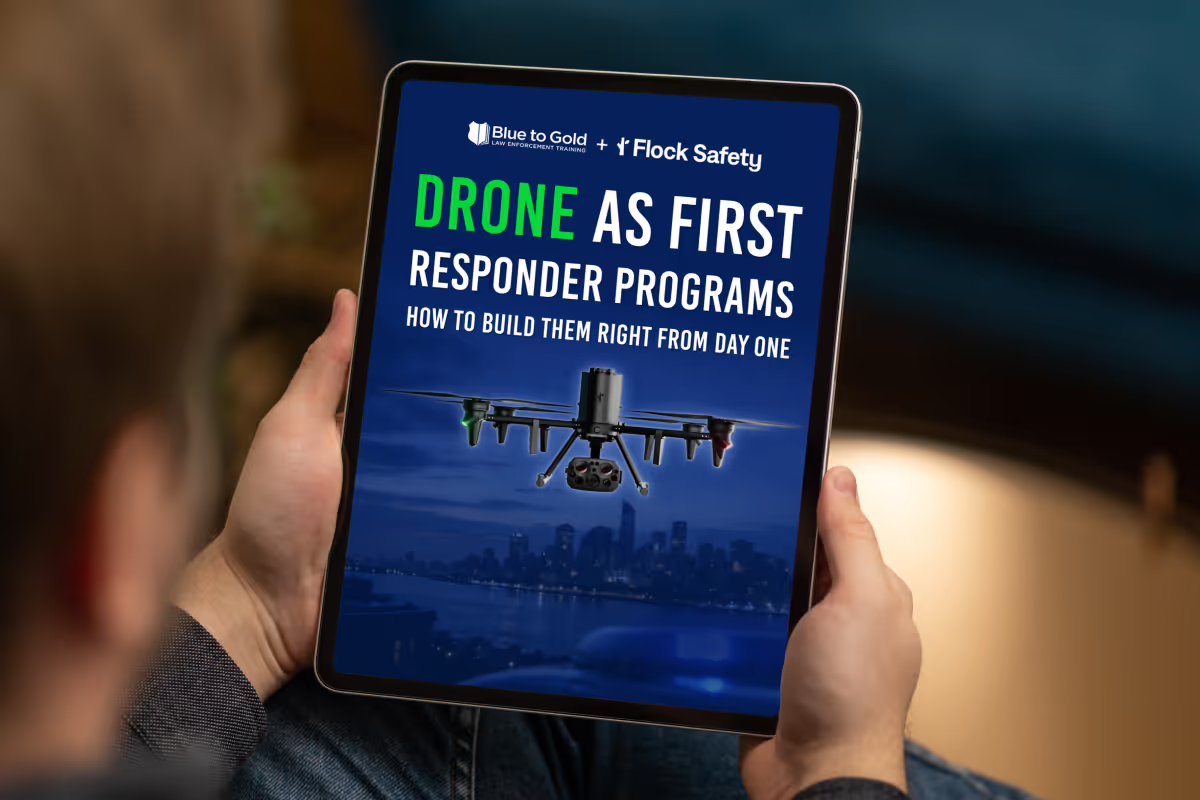
A comprehensive guide to launching constitutional, effective Drone as First Responder programs from day one.
DFR technology is transforming law enforcement. Drones arrive on scene in minutes, providing critical intelligence before ground units. But with that capability comes legal responsibility. Agencies need clear guidance on Fourth Amendment compliance, operational best practices, and community trust. This guide, based on insights from Attorney Anthony Bandiero (Blue to Gold) and Fritz Reber (Flock Safety), gives agencies the legal and operational foundation to build DFR programs the right way.
Building It Right from Day One
- The DFR Revolution: Understanding the operational impact, technology stack, and rapid growth of DFR programs across law enforcement.
- Fourth Amendment Fundamentals: Applying the CREW Framework (Consent, Recognized Exception, or Warrant) to every drone deployment.
- Curtilage, Open Fields & Aerial Case Law: Navigating key Supreme Court decisions and understanding where constitutional protections apply.
- Trespass Doctrine & Thermal Imaging Limits: Avoiding legal pitfalls with offset positioning tactics and technology-specific restrictions.
- Operational Best Practices: Implementing deployment discipline, incident-only launch protocols, and repeatable risk management strategies.
- Action Steps & Implementation: Ready-to-use checklists, training requirements, community engagement plans, and policy templates to get your program started.
Drone as First Responder Programs: How To Build Them Right From Day One
A comprehensive guide to launching constitutional, effective Drone as First Responder programs from day one.
DFR technology is transforming law enforcement. Drones arrive on scene in minutes, providing critical intelligence before ground units. But with that capability comes legal responsibility. Agencies need clear guidance on Fourth Amendment compliance, operational best practices, and community trust. This guide, based on insights from Attorney Anthony Bandiero (Blue to Gold) and Fritz Reber (Flock Safety), gives agencies the legal and operational foundation to build DFR programs the right way.
Building It Right from Day One
- The DFR Revolution: Understanding the operational impact, technology stack, and rapid growth of DFR programs across law enforcement.
- Fourth Amendment Fundamentals: Applying the CREW Framework (Consent, Recognized Exception, or Warrant) to every drone deployment.
- Curtilage, Open Fields & Aerial Case Law: Navigating key Supreme Court decisions and understanding where constitutional protections apply.
- Trespass Doctrine & Thermal Imaging Limits: Avoiding legal pitfalls with offset positioning tactics and technology-specific restrictions.
- Operational Best Practices: Implementing deployment discipline, incident-only launch protocols, and repeatable risk management strategies.
- Action Steps & Implementation: Ready-to-use checklists, training requirements, community engagement plans, and policy templates to get your program started.




Ready to Discover a Better Approach?
Let’s discuss how Flock Safety’s evidence-based approach can help your area without overstepping boundaries.