
.webp)









How to Find a Car Without a License Plate Number
Learn how to find a car without a license plate using vehicle features, security tools, and AI-powered cameras to strengthen investigations and protect your property.

There’s a break-in at your company, and the suspect runs and gets into a vehicle. When you look at your parking lot footage, you find that the vehicle’s license plate is missing.
Unfortunately, as security strategies evolve, so do suspects’ measures, and many will remove or conceal their license plates to minimize their risk of being identified.
The good news for security teams is that this is a solvable problem.
Here, we explore how to identify vehicles without plate information. We also look at how modern solutions can surface other identifying details, like vehicle type, make, and color, to support investigations.
Key takeaways
- Missing or obscured license plates are a common tactic used to avoid identification, but they do not make vehicles untraceable.
- Security teams should document multiple observable vehicle traits, including color, body style, make, damage, decals, and direction of travel.
- Privacy laws like the DPPA restrict access to DMV data, requiring collaboration with law enforcement for official record searches.
- AI-powered LPR and video systems can identify vehicle characteristics beyond plate numbers, improving investigative outcomes.
- Building a comprehensive vehicle profile increases the likelihood of identifying offenders, even when plate data is unavailable.
Why missing license plates present a real challenge
Missing plates can be problematic for both security teams and law enforcement because:
- License plates are the most direct way to identify a vehicle.
- Missing plates give offenders a level of anonymity, which may help them avoid identification.
- They can slow down investigations, reducing the likelihood of recovering stolen property.
There are a number of scenarios when missing or obscured plates could pose a challenge: Suspects may intentionally hide their plates, cameras may miss them under certain weather conditions (such as when it’s raining), and poor camera angles may provide limited visibility. This makes it important to find alternative means of identification.
3 key methods to identify vehicles beyond license plates
While license plates are the most standardized way to identify vehicles, they’re not the only feature that can help. In fact, it’s better to rely on multiple vehicle traits for identification accuracy:
1. Color and body style
When used alongside other details, vehicle color and body style can help narrow down potential matches. For example, a description like “blue coupe with a matte finish” could help identify a vehicle from a list of coupe options.
When documenting the color and body style, try to be as specific as possible, noting:
- Primary and secondary colors
- Color variations
- Distinctive wraps
- Finishes, such as solid, matte, pearlescent, or metallic
2. Make identification
Vehicle make enhances searchability, bringing teams closer to identifying offenders’ cars. While you can rely on solutions like Flock’s cameras for make identification, it helps if you also know how to identify different vehicles. This way, you can verify our system’s results.
3. Unique markings or damage
It’s highly unlikely to find two vehicles with the same distinct markings or damage patterns. So, documenting these traits could significantly aid investigations.
For example, a description like “metallic white Toyota Camry with a dent on the bumper and a local college’s sticker” would go a long way in distinguishing an offender’s vehicle from other “metallic white Toyota Camrys” in your area.
Flock’s cameras can help you capture valuable evidence by identifying distinctive features such as roof racks, stickers, and decals.
What the law allows—and restricts—when accessing vehicle data
The law has specific restrictions on the information organizations and individuals can access to protect the general public’s privacy. That said, it supports investigations by permitting certain levels of access to specific entities.
Here’s a look at what’s allowed and what’s not:
Driver Privacy Protection Act (DPPA)
The Driver Privacy Protection Act (DPPA) protects individuals’ personal information in Department of Motor Vehicles (DMV) records. It restricts DMVs or any of their employees from disclosing or sharing vehicle registration details—such as drivers’ names, addresses, phone numbers, and driver’s license (DL) numbers—with private businesses and individuals.
Access to DMV data
While privacy laws like the DPPA can be restrictive, they do offer exceptions for data disclosure. Some entities that can legally access motor vehicle records include:
- Government agencies (for legitimate government functions)
- Law enforcement (to support investigations)
- Insurance companies
- Towing or impound facilities
Why security professionals must rely on observable traits
Without plate data, you can only rely on visual vehicle traits to identify cars. So, collect as many descriptors as possible—vehicle makes, body styles, colors, damage patterns, and decals. Record when suspected vehicles access (and leave) your property, and their direction of travel, to help law enforcement narrow down possible locations.
Best practices for documentation
While it may be tempting to access DMV data illegally to speed up investigations, doing so could cause a lot of trouble for your business. Avoid accessing DMV databases without the proper authorization and, instead:
- Document visible vehicle identifiers.
- Share the descriptions with law enforcement—their systems could surface vehicles’ license plates for better DMV searchability.
- Share any recorded footage with law enforcement.
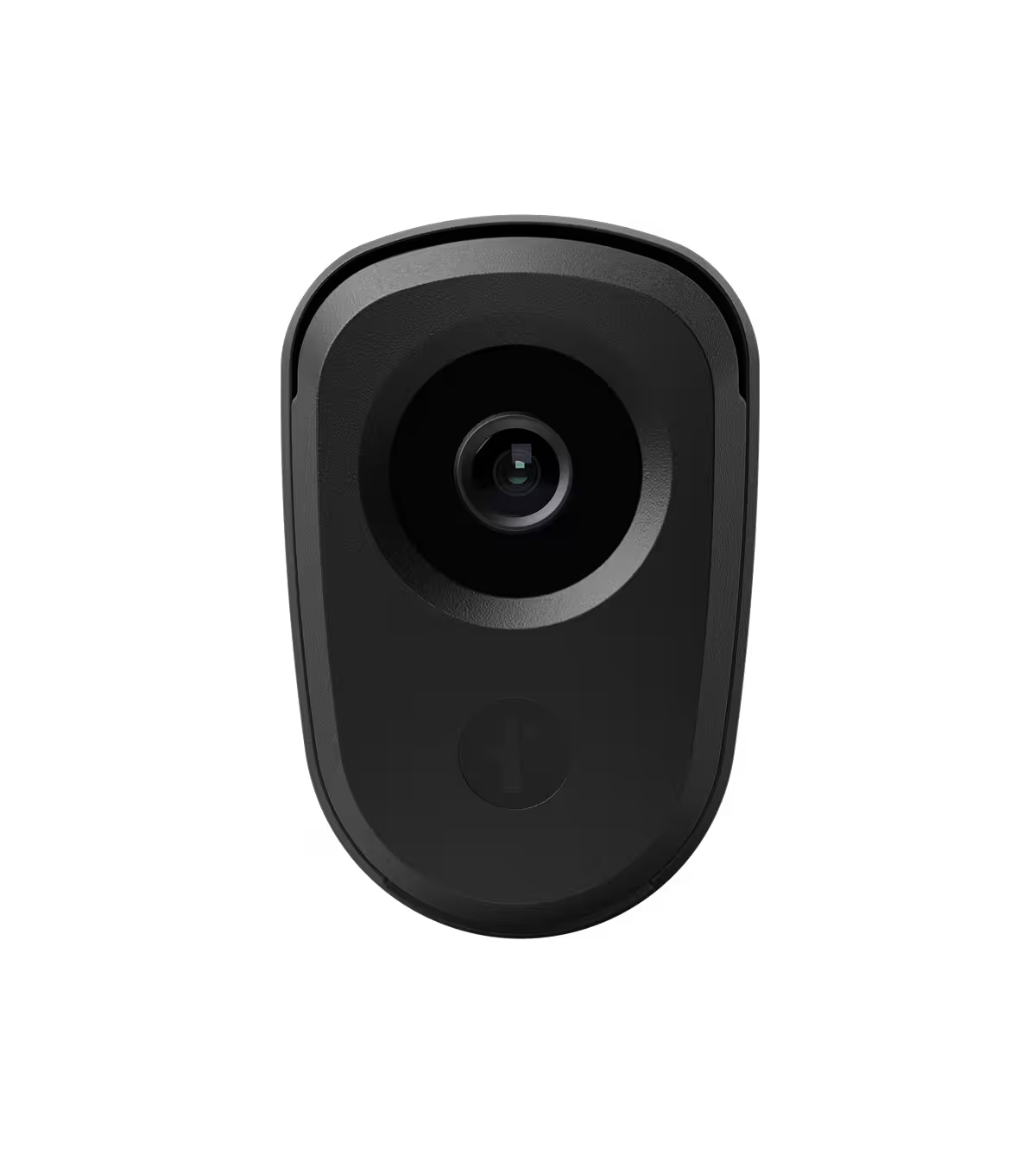
Flock’s video and license plate reader (LPR) cameras can help, as they provide vehicle footage and images along with time stamps and other data that supports investigations helps maintain evidence integrity.
How advanced cameras and technology can help
Modern technology solutions like AI-powered LPR cameras have made it possible to identify vehicles even when plates are obscured or missing. Here’s how they support investigations:
AI-driven vehicle license plate reader cameras
Modern AI-powered LPR cameras do more than collect license plate data; they can also accurately identify vehicle details like body style, color, and unique identifiers quickly. Some LPRs can also send real-time alerts when they locate suspected vehicles on your premises, allowing for quick intervention from your security team.
Real-time alerts and evidence sharing
Modern solutions and platforms also find potential matches based on recorded traits. Flock’s LPRs, for example, collect details like plate numbers and vehicle type, make, and color. They then send real-time alerts when they locate suspected vehicles on your premises. This can minimize the risk of repeated incidents.
Flock also streamlines evidence sharing by providing a real-time crime center (FlockOS) that integrates data from your cameras and LPRs and facilitates collaboration with law enforcement.
Free and paid lookup options: Limitations and tips
Some free online lookup solutions may claim to surface valuable information, even without license plates. However, this is a misconception. Here’s what free and paid lookup options offer:
Free license plate lookup vs. paid lookup tools
Free online services typically require full license plate numbers to provide information. Even then, they only offer limited details, like basic vehicle histories, if they’re in the public domain. Privacy laws like DPPA limit access to personal and contact information.
While paid lookup tools are also subject to privacy laws, they offer more extensive information and can work without complete license plate numbers. If the tool integrates with LPRs, it could surface valuable data (such as when the vehicle was on your premises) or send alerts if a car matching that description accesses your property.
When a license plate search may fall short
License plate searches are the easiest way to find suspects’ vehicles. But even the best search tools, like DMV databases (open for law enforcement), may have limitations if offenders use:
- Out-of-state vehicles: Some states have limitations on the type of information officers can access. California, for example, allows authorized law enforcement agencies to access vehicle records but restricts access to drivers’ identification documents.
- Temporary plates: Offenders usually get rid of them after crimes.
- Modified plates: Obscured or altered plates provide inaccurate search results.
- Older vehicles: Vehicle owners may have changed without updating vehicle information, making it unreliable.
With such limitations, you shouldn’t rely solely on license plate data. Create a comprehensive identification profile that also features characteristics like color, registration stickers, and unique markings—and share the information with local authorities.
Build smarter security with or without a license plate
While license plates are great for offender identification, they’re not the only valuable detail. Watch out for other visual identifiers (such as unique vehicle markings and damage patterns) to create a robust vehicle profile that can aid investigations.
Flock’s video cameras and LPRs can help you collect plate data and other relevant information, like vehicle make. We also provide timestamped (and geotagged) evidence as well as a real-time collaboration platform to support law enforcement investigations. Our team of experts offers end-to-end support to help you make the most out of our AI-powered tools.
Looking for ways to identify vehicles without license plate numbers? Schedule a demo with Flock to see how our products can help.
*Disclaimer: Flock captures data from public, plain-view areas (e.g., parking lots, roadways). Technology is designed to support investigations while protecting privacy and civil liberties.
FAQs
Can you legally find a car owner without a license plate number?
No, private individuals and businesses cannot legally access DMV records without a license plate number or proper authorization. Access to owner information is restricted under laws like the Driver Privacy Protection Act (DPPA). Law enforcement agencies can access this data for legitimate investigations.
What should I do if a suspect vehicle has no license plate?
Document as many observable details as possible, including make, model, color, body style, damage, decals, roof racks, and direction of travel. Preserve footage and share all relevant information with law enforcement to support their investigation.
Are free vehicle lookup tools reliable?
Most free lookup tools require a full license plate number and provide limited, often outdated information. They cannot legally provide personal owner details. Paid services may offer more vehicle history data but are still restricted by privacy laws.
Can security cameras identify vehicles without plates?
Yes. Modern AI-powered video and LPR systems can identify vehicle make, body style, color, and distinctive features, even when plates are missing or obscured. This allows security teams to build a searchable vehicle profile.
What laws restrict access to vehicle registration information?
The Driver Privacy Protection Act (DPPA) is a federal law that limits public access to personal information in DMV records. It allows access only for specific entities, such as law enforcement, government agencies, and certain licensed organizations.


Protect What Matters Most.
Discover how communities across the country are using Flock to reduce crime and build safer neighborhoods.