
.webp)








Modern Neighborhood Gate Systems: Why Virtual Gates Work Better
Learn how virtual neighborhood gate systems use LPR cameras and secure data-sharing to improve visibility, deter repeat incidents, and support communities.

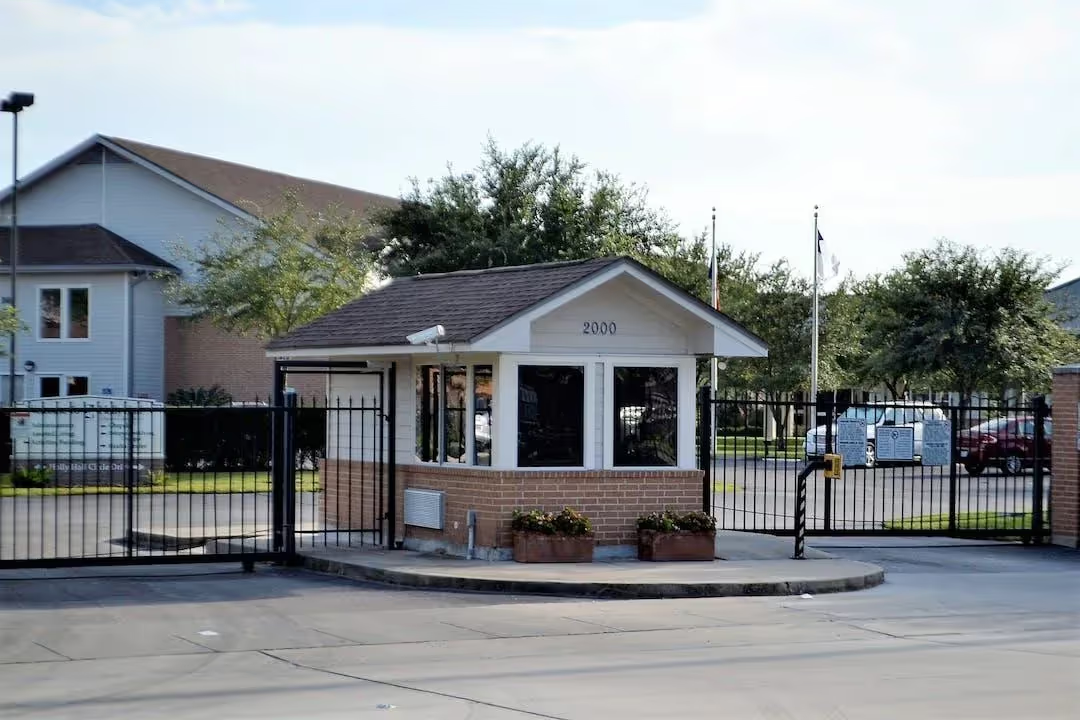
As neighborhoods work to address issues like vehicle theft, vandalism, package theft, and unauthorized access, many communities are reconsidering whether traditional gated entrances provide meaningful protection. Physical gates can be expensive to maintain and are vulnerable to tailgating or unauthorized access through cloned credentials. When incidents occur, they often don’t provide useful evidence.
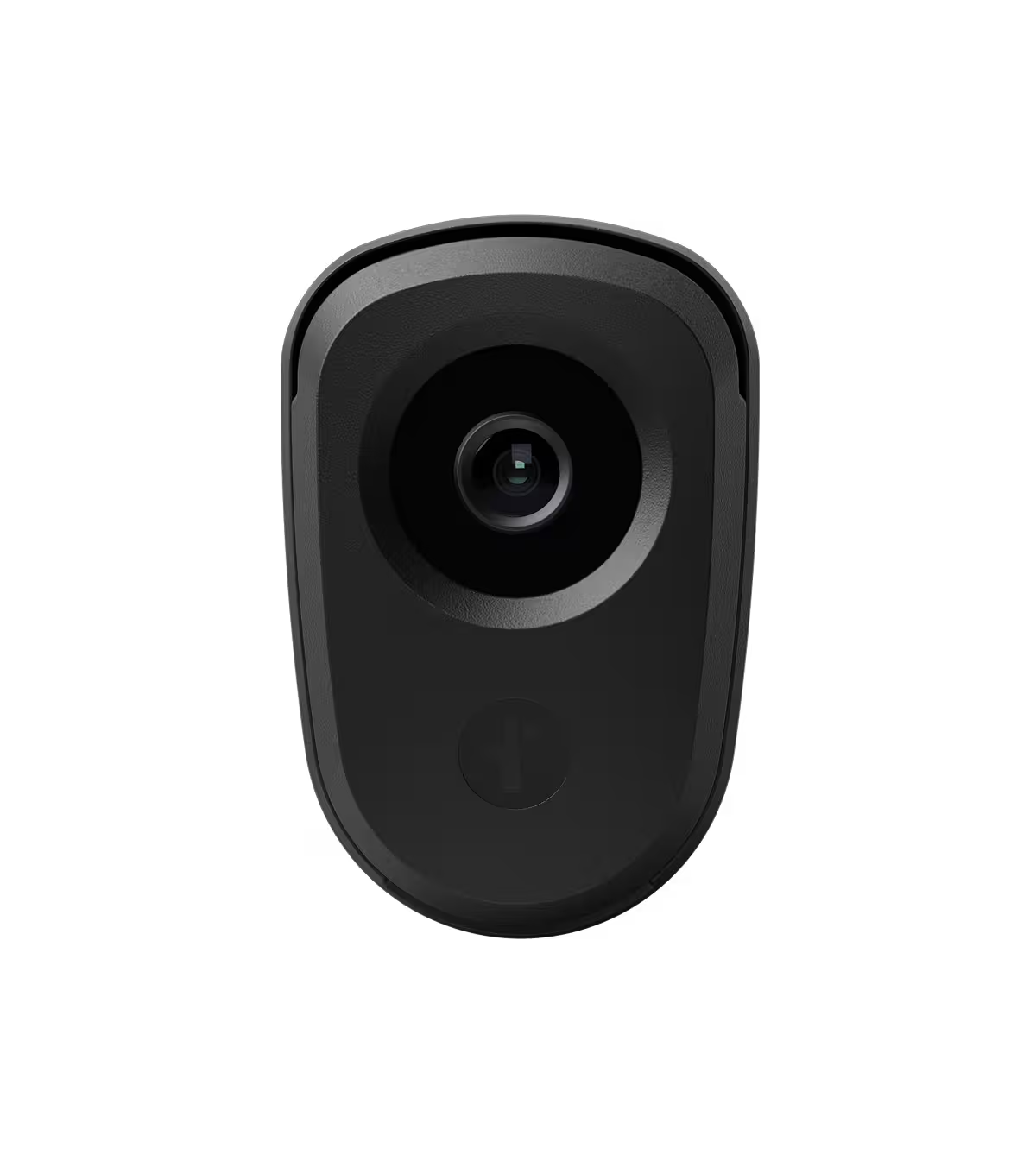
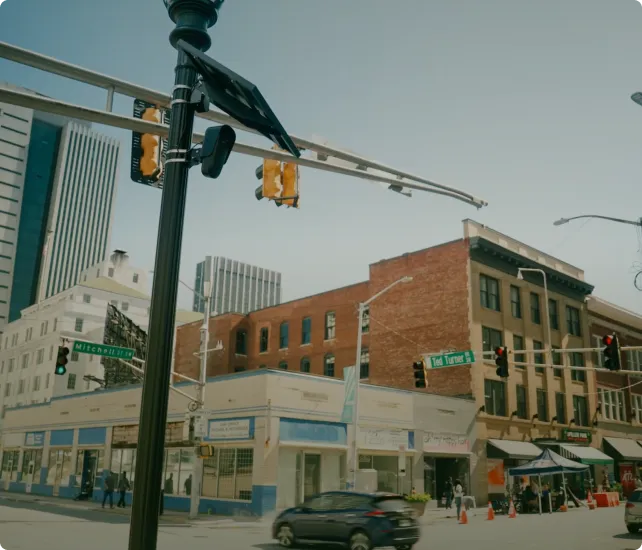
License plate readers (LPR) can create virtual gate systems at neighborhood entrances and exits, giving communities visibility into vehicle activity without the need for physical barriers. Combined with automated alerts and community-controlled data sharing, these systems help document activity at key access points throughout a neighborhood.
In addition to capturing license plates, Flock LPR cameras collect a Vehicle Signature that can include characteristics such as a vehicle’s make, color, body type, and other observable features. This broader context helps communities understand activity patterns and provides law enforcement with objective evidence that can help advance investigations when a crime occurs.
Key takeaways:
- Virtual gate systems provide point-in-time entrance visibility, helping communities document vehicles entering and exiting with clear, searchable details.
- Physical gates may deter some activity but often leave visibility gaps. Virtual systems provide a record of activity and real-time alerts across entry points.
- Networked license plate readers (LPR) help communities identify repeat vehicles, support follow-up, and manage long-term costs through scalable coverage. Transparent data practices help align use with resident expectations.
The real problems neighborhood gate systems must solve today
Many secure neighborhoods no longer rely on physical gates alone for protection. As access methods, resident expectations, and local safety needs evolve, community leaders, property owners, Homeowners Associations (HOAs), and site managers across residential communities face new challenges.
In many cases, traditional gate access control systems are designed to grant access to residents and approved visitors and are often paired with physical barriers such as sliding gates, swing gates, or barrier arms. While these setups manage entry, they offer limited visibility into what happens after a vehicle enters.
A delivery van passing through an entrance gate behind a resident may appear routine but can still create an opportunity for unauthorized access. Without clear records, it becomes difficult to understand how it entered or where it moved within the neighborhood.
Access systems can also be vulnerable to misuse. In some cases, people clone RFID credentials or exploit signals from a resident’s key fob to gain entry or unlock a vehicle. When this happens, physical gates typically don’t provide license plate data or a reliable record of entry and exit activity.
These gaps point to a broader issue: many traditional security gate systems focus on restricting entry, but offer limited visibility when something goes wrong.
Why visibility matters more than barriers
Physical gates create a sense of security and may deter some activity. However, barriers cannot fully prevent issues like tailgating or forced entry and often require ongoing maintenance and repairs.
To address these limitations, HOAs are adopting virtual gate systems that use LPR cameras to improve visibility at every access point. These systems can identify vehicles by license plate or, when plates are missing or obscured, by attributes like make, color, body type, and other distinguishing features. This approach gives communities a clearer record of vehicle activity at covered entry and exit points and provides reliable information that can be shared with law enforcement when needed.
How virtual neighborhood gate systems work
A virtual gate system doesn’t rely on physical barriers. Instead, it uses LPR cameras at neighborhood entrances and exits to provide a clearer picture of vehicle activity when it matters. Unlike security cameras that simply record video, virtual LPR gate systems create a searchable record of activity.
These systems follow a structured workflow:
- Capture: The system records vehicles as they enter the community in real-time.
- Match: Details are compared against authorized vehicle lists, when applicable, and "Safe Lists" of known vehicles, such as resident vehicles.
- Alert: If a vehicle of concern appears, authorized users or law enforcement can be notified.
- Historical search: Authorized personnel such as property managers or security team members can search by vehicle-specific traits for a documented purpose to identify relevant activity for follow-up.
- Evidence sharing: Relevant vehicle information can be shared with law enforcement to support investigations.
This approach helps communities maintain a clear record of vehicle activity, support follow-up when incidents occur, and contribute to safer neighborhoods.
The components of a virtual gate system
A virtual gate system relies on a combination of hardware and software components that work together to provide consistent visibility:
- License plate readers and Vehicle Signature technology: Flock’s LPR system captures license plates and converts them into searchable vehicle data. Vehicle Signature technology can help search by vehicle characteristics such as make, color, body type, and other vehicle information when plates are missing or unclear.
- Community safe lists and role-based access: Flock’s safe lists help filter out known vehicles, such as those belonging to residents, to reduce unnecessary alerts. Access is limited to authorized users based on defined roles and permissions.
- Seamless workflows: Flock connects license plate reader data, real-time alerts, search capabilities, and law enforcement sharing workflows so authorized users can review and act on vehicle information as needed.
- Customer-governed data-sharing and retention policies: Flock LPR virtual gate systems operate under clear policies for how data is stored and shared. Customers own their data, access is logged, and data is automatically deleted after 30 days by default unless a different retention period is required by the customer.
Together, these components provide a reliable, searchable record that can support investigations as situations arise.
Automated alerts and shared visibility with law enforcement
Virtual gate systems can notify authorized users when a vehicle matching approved criteria enters the neighborhood, including customer-defined alerts and authorized hotlists, when applicable.
If an incident occurs, authorized users can grant law enforcement limited access to relevant LPR camera images and vehicle details during an active investigation. This supports coordination and gives investigators access to timely, objective information, while maintaining established privacy and data retention policies.
Physical vs. virtual gates: Safety, coverage, and cost
Choosing between physical and virtual gates is a long-term operational decision that affects residents, property managers, and HOAs. Traditional community gates offer familiarity, while virtual gates provide greater visibility into what enters and exits the community. Fundraising and budgeting considerations also shape how communities evaluate each option.
Several key factors can help guide this decision:
Coverage and evidence generation
Physical gates monitor access at a single entry point. If an incident occurs, they typically don’t provide useful information about what happened or which vehicles were involved.
Virtual gates can cover each monitored entrance and create a searchable record of entry and exit activity. This allows law enforcement to reference the license plate or vehicle details when following up on an incident.
Maintenance, liability, and resident experience
Physical gates require ongoing maintenance and repairs. Access terminals can become unreliable, and congestion during peak hours can create frustration for residents. Tailgating can also allow unauthorized vehicles to enter, reducing the effectiveness of the gate access control system.
In contrast, virtual LPR gates have fewer moving parts and typically require less maintenance. Cameras don’t impede entry or interfere with traffic flows, helping simplify community access for residents and visitors. Teams also spend less time issuing access credentials and managing guest access, helping to streamline day-to-day operations.
Scalability and long-term value
For communities with multiple entrances or plans to expand, scalability is an important consideration. Each additional physical gate requires upfront investment, ongoing maintenance, and potential disruption during installation.
Virtual gate systems typically are lower maintenance. As new access points are added, cameras can be deployed without major disruption.
Long-term value depends on how effectively a system supports follow-up when incidents occur. Physical gates often require continued investment without improving visibility, while virtual gates provide a consistent, searchable record that supports ongoing use without added maintenance burdens.
What to look for in a modern neighborhood gate system
Selecting a security system is one of the most significant investments an HOA will make. To move beyond the limitations of traditional barriers, boards should evaluate LPR and virtual gate systems based on their core functionality.
Below is a practical checklist to use when evaluating vendors based on a neighborhood’s specific needs:
- Vehicle identification beyond the plate: Can the system identify a vehicle if the plate is missing, or a temporary tag? Look for capabilities such as ability to capture make, color, and distinguishing features like decals or roof racks.
- Real-time alerts vs. passive recording: Does the system simply record images for later review, or can it notify authorized users when a vehicle matching approved criteria enters the neighborhood?
- Predictable subscription model: Look for a model that includes hardware, software, and ongoing service and support at a predictable annual cost. Flock offers a service-included model designed to reduce unexpected repair expenses.
- Auditability and access control: Ensure the platform offers role-based access and clear audit logs so communities can see who accessed information and when. Flock provides role-based access controls and audit logs to support accountability.
- Transparent data retention: Look for retention policies with limited storage windows and clear governance over how information is used and shared. Flock automatically deletes data after 30 days by default, unless a different retention period is required by the customer, and does not sell customer data to third parties.
The outcomes neighborhoods actually see with virtual gate systems
Communities that adopt virtual gate networks often report improvements in visibility and follow-up. Common outcomes include:
- More informed follow-up on recurring incidents: When vehicles of interest can be identified and shared with law enforcement, it can help deter repeat activity over time.
- Better case support for law enforcement: Instead of relying on unclear images, communities can provide specific vehicle details that help inform next steps.
- Reduced manual work for HOA and community management teams: Teams may spend less time managing physical gate maintenance, issuing access credentials, or troubleshooting keypads and other entry systems, which can simplify day-to-day operations.
- Improved community confidence and perception of safety: As visibility improves, residents may feel more informed about activity within their neighborhood, offering peace of mind.
Stronger neighborhood safety starts with better visibility
Neighborhood safety is increasingly defined by how well communities can understand and respond to activity within their environment, not just restrict access. Systems that offer consistent records, responsible data handling, and shared access to information help address the gaps left by traditional gates.
Flock supports this approach, giving communities point-in-time visibility into vehicle activity at entry points and a reliable record that can be referenced when needed.
Ready to strengthen your community’s security with greater visibility? Book a demo with Flock to see how virtual LPR gate systems can help.
FAQs
Do virtual neighborhood gates require a physical barrier?
No. Virtual gate systems rely on license plate readers placed at entrances and exits rather than a physical gate arm. They provide visibility and a record of activity each time a vehicle enters, without requiring gated communities to manage fobs, key cards, or access codes.
Do virtual gates work at night or in poor weather?
Yes. License plate readers are designed to capture vehicle details in a range of conditions, supporting consistent visibility when properly sited and configured.


Protect What Matters Most.
Discover how communities across the country are using Flock to reduce crime and build safer neighborhoods.