
.webp)






.jpg)


Essential Loss Prevention Technology for Today’s Stores
Learn how modern loss prevention technology, like LPR cameras and connected systems, helps retailers improve visibility and reduce shrink.

Loss prevention technology helps retailers connect in-store controls, exterior visibility, and evidence workflows so asset protection teams can deter theft, understand incidents, and coordinate with law enforcement more efficiently. As organized retail crime (ORC) becomes more complex, a layered security system gives teams clearer visibility across the full property. Retailers have reported an 18% increase in shoplifting incidents year over year according to the National Retail Federation, underscoring the need for reliable tools that support safer, faster investigations.
Key Takeaways
- Retail shrink increasingly begins or ends outside the store, making exterior visibility just as important as interior tools.
- Loss prevention technology works best as a layered security system that includes interior cameras, access controls, license plate readers (LPR), and mobile security trailers.
- License plate readers (LPR) help retailers identify investigative leads related to repeat incidents or organized retail crime activity and provide searchable evidence that can be shared with authorized partners to support investigations.
- Mobile security trailers extend deterrence and coverage to high-traffic areas and property blind spots.
- Connected security systems give asset protection teams a clearer view of incidents across locations and help them collaborate more effectively with law enforcement.
Why Modern Retail Environments Need Stronger Loss Prevention Technology
The retail industry continues to face more complex loss patterns that traditional security tools were not designed to address. Today, retailers regularly face challenges such as:
- Coordinated organized retail crime (ORC): While individual shoplifters are still a factor, there has been an increase in coordinated groups operating across multiple locations and moving stolen goods quickly through resale channels.
- More violent incidents: Many retailers report that some shoplifting incidents escalate to violence more quickly, prompting a shift toward strategies that prioritize employee and customer safety while reducing the need for direct confrontation.
- Increased exterior vulnerabilities: Retail theft and cargo loss often occur in parking lots and loading docks rather than on the sales floor, creating a greater need for visibility across the full property.
- Higher return fraud and internal losses: In addition to shoplifting incidents, fraudulent returns and employee theft continue to affect profitability and operations.
To address these realities, retailers need more than standalone tools. They need technology that provides clear, objective evidence and helps teams act on reliable information without relying on direct engagement.
Core Types of Loss Prevention Technology
Retailers have access to a wide range of loss prevention technologies. While each component provides value on its own, these tools are most effective when they work together as a layered system. Core categories of loss prevention technology include:
- Interior visibility tools that help document in-store activity and support employee safety.
- In-store operational systems that help retailers manage access, inventory, transactions, and item-level movement.
- Exterior visibility tools, including license plate readers and mobile security trailers, that help document vehicle activity and extend coverage beyond the storefront.
Interior Camera Systems and Basic Video Monitoring
CCTV cameras have long served as a foundational tool for documenting in-store activity and supporting employee safety. Traditionally, these systems were used for passive recording, with most value coming from reviewing images after a theft had already occurred.
Today, AI-powered video systems provide more immediate insight. These tools can surface relevant events in real time, helping teams review activity that may require attention. When integrated with broader platforms and perimeter visibility tools, they support faster investigations and a more complete understanding of incidents.
Access Control and In-Store Operational Tools
Today's retailers use a range of tools to reduce potential theft and improve inventory control. Some of the most common technology solutions include:
- Electronic article surveillance (EAS) systems use specialized barcodes and tags that trigger alarms at store exits if items are taken without purchase, helping retailers manage inventory shrinkage at the point of sale without disrupting the customer experience.
- Radio frequency identification (RFID) tags help retailers streamline inventory management by monitoring SKU movement across warehouses and storefronts.
- Point-of-sale (POS) integrations connect transaction records with inventory management platforms and video systems so teams can identify discrepancies more efficiently.
- Smart shelving uses weight-based sensors to provide real-time alerts when larger quantities of high-value items are removed, including in self-checkout areas.
License Plate Readers (LPR) for Perimeter Visibility
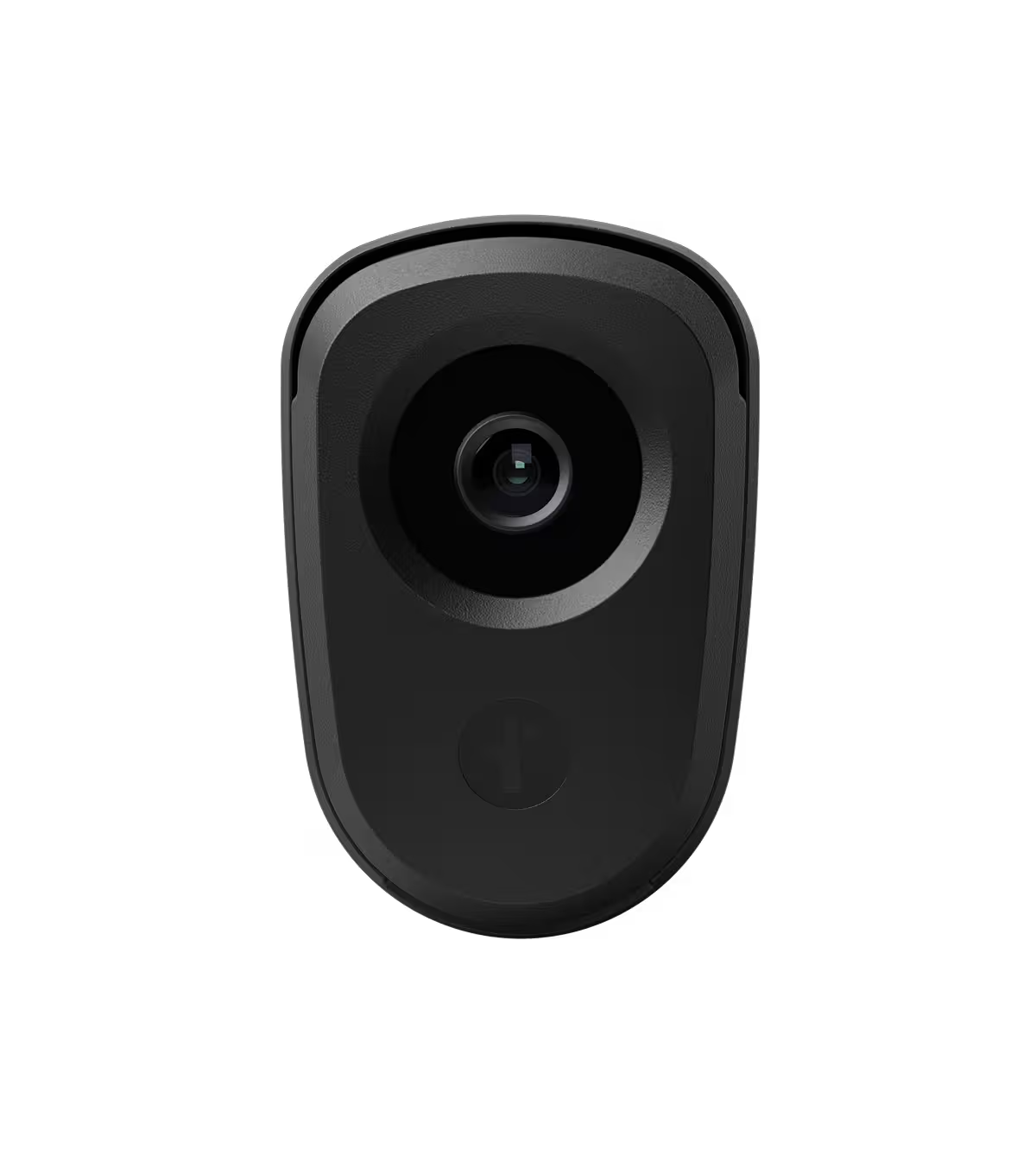
While many retailers focus their loss prevention strategies on in-store activity, many incidents begin and end outside the storefront. LPR cameras provide the visibility needed to identify vehicles associated with retail theft and other ORC activity.
License plate readers automatically capture license plate data and vehicle details. During an investigation, this information helps retailers develop leads related to specific incidents or past cases of inventory shrinkage involving parking lots or loading docks, and should be reviewed alongside other evidence.
Mobile Security Trailers for Flexible, High-visibility Deterrence
Many retailers see higher volumes of traffic and stock movement during peak periods, with risks that shift seasonally. Temporary construction projects or new parking areas without full coverage can also create gaps.
Mobile security trailers are a portable solution for extending visibility in these scenarios without the same fixed infrastructure requirements as permanent camera installations. Instead of relying on solutions that require trenching or electrical work, mobile security trailers are solar-powered, giving retailers flexibility to place coverage where fixed infrastructure is limited.
This flexibility makes them well-suited for high-traffic areas where fixed cameras may be limited, helping provide a visible deterrent to theft outside retail stores.
Why Exterior Visibility Is Essential to Modern Loss Prevention
Retailers often focus their loss prevention efforts inside the storefront first. Prioritizing internal deterrents like EAS tags, security mirrors, and cameras is a strong starting point, but it has limitations.
With many incidents beginning and ending in parking lots or loading areas, exterior visibility is a critical layer of any modern loss prevention strategy. Prioritizing exterior visibility can support key retail needs, including:
- Providing investigative evidence: Capturing activity across covered areas of the property, including areas outside the storefront, helps teams build a clearer picture of what occurred and supports faster investigations.
- Reducing perimeter blind spots: Consistent visibility in parking lots and loading docks helps limit gaps that may otherwise be used to approach or leave a property unnoticed.
- Improving real-time awareness: Modern loss prevention technologies like Flock provide relevant alerts and vehicle or event context from covered areas of the property, helping security staff respond with better information and reduce the risk of escalation.
How connected systems unify incident data and support faster investigations
Standalone security systems may offer value, but they can also create information silos that slow investigations. For example, if a retailer has interior images of a theft but no visibility into the vehicle used to leave the scene, it can be difficult for teams to move the case forward.
By connecting storefront video, perimeter coverage from LPRs, and mobile security trailers into a single system with Flock, retailers gain a clearer perspective on how incidents unfold from start to finish. With the right connected systems in place, teams can follow a more streamlined evidence workflow that improves operational efficiency:
- Detect: Interior and exterior systems surface relevant events, such as unauthorized vehicle alerts or activity that may require attention.
- Verify: Connected systems link alerts with video and other data sources to provide immediate context, helping teams confirm what occurred and assess next steps.
- Respond: Using this information, teams can coordinate with on-site personnel and adjust security strategies to address retail theft and reduce inventory shrinkage.
- Share: After an incident, teams can compile an incident timeline and share authorized evidence with law enforcement to support investigations.
How Technology Helps Create Safer Environments for Employees and Customers
An important consideration for retailers implementing new loss prevention initiatives is the safety of employees and shoppers. When teams are well-trained and have access to reliable alerts and clear visibility across the property, they're better equipped to handle incidents without unnecessary escalation.
Platforms like Flock support this by providing relevant alerts and incident context. By surfacing vehicle details and event information from covered areas, Flock gives teams the context they need to coordinate responses from a distance.
This approach helps reduce the risk of dangerous confrontations and supports a safer environment for everyone involved.
What Retailers Should Look for in Modern Loss Prevention Technology
When choosing retail loss prevention technology, it's important to strike a balance between broad coverage and streamlined operational support.
Key criteria to evaluate include:
- Cloud capabilities: Choose cloud-enabled solutions that allow teams to access systems across multiple locations without relying on on-site servers.
- Cost-effective subscription models: Look for predictable, maintenance-included pricing that covers hardware updates and ongoing support to reduce unexpected costs.
- Easy and scalable deployment: Select solutions that can be implemented across multiple locations without requiring extensive construction or infrastructure changes.
- System compatibility: Ensure tools work with existing infrastructure to avoid silos and support a more unified approach for managing security incidents.
Loss Prevention Technology Plays a Central Role in Modern Retail
As inventory shrinkage continues to challenge the retail industry, traditional loss prevention methods don’t fully address today’s risks. Retailers need a more comprehensive approach that combines interior tools, exterior visibility, and connected systems to support both deterrence and investigations.
Access control tools, LPR cameras, and mobile security trailers each play a role in expanding visibility across properties. When these systems work together, retail teams can better understand incidents, coordinate responses, and build stronger cases. Platforms like Flock help streamline key workflows, improve situational awareness, and support evidence collection, giving teams the information they need to act with confidence.
Ready to strengthen your retail loss prevention strategy? Schedule a demo with Flock today.
FAQs
What types of loss prevention technology do retailers typically use?
Retailers typically use interior cameras, access control systems, RFID and EAS tags, license plate readers, and mobile security trailers. These tools work together to deter theft, document incidents, and support investigations.
Why is exterior visibility important for reducing retail shrink?
Exterior visibility helps retailers understand incidents that begin or end in parking lots, loading docks, or areas outside traditional camera coverage. Visibility in these locations can help teams identify repeat vehicles, understand incident patterns, and gather evidence that supports investigations.
How do license plate readers help with loss prevention?
License plate reader cameras provide searchable vehicle details, such as plate state, make, body type, and other visible identifiers. This information helps retailers develop investigative leads related to theft or related incidents, and it should be reviewed alongside other evidence.
Do mobile security trailers replace store personnel?
No. Mobile security trailers complement existing cameras and staffing by providing a visible deterrent and flexible coverage in areas that are difficult or costly to hardwire. They help stores adapt to changing risks without adding operational complexity.
How does connected loss prevention technology improve investigations?
Connected loss prevention technology improves investigations by bringing interior video, perimeter visibility, and LPR data into a more unified evidence workflow. This helps asset protection teams build clearer incident timelines, work more efficiently, and share authorized evidence with law enforcement.


Protect What Matters Most.
Discover how communities across the country are using Flock to reduce crime and build safer neighborhoods.