
.webp)








Close the Campus Police Response Gap with Drone as First Responder
Drone as First Responder helps campus police close the gap between dispatch and arrival at a call for service with real-time visibility, safer responses, and better-informed decisions.

A call for service comes in from the far side of a 400-acre campus. Officers respond, and by the time they arrive, the situation has already shifted. They’re unaware of what they are walking into until they are standing in the middle of it.
This is a common scenario for campus police at universities across the country.
Campus police departments are responsible for protecting some of the most complex public safety environments in the country. Large campuses operate like small cities, with residence halls, athletic facilities, parking structures, healthcare centers, research labs, and thousands of students, staff, and visitors moving through them at all hours of the day. At the same time, many departments are expected to respond quickly with lean staffing models and limited resources.
Effective response starts with providing officers with the context they need before they arrive. This is where modern campus police technology is needed to expand situational awareness.
With Drone as First Responder (DFR) for campuses, universities can deploy a camera to the scene in seconds, helping officers respond faster, make better decisions, and improve officer safety without increasing headcount.

The Problem: A Blind Spot Between Dispatch and Arrival
On most campuses, calls for service still follow the same traditional response model.
Dispatch receives a call. An officer is assigned. The officer travels across campus. And throughout the time between dispatch and arrival, command operates with limited information.
There is no visual context. No live understanding of what is unfolding. Just a nature code, a rough location, and radio traffic.
For campus police departments covering hundreds or even thousands of acres, that information gap creates real operational risk.
An argument outside a residence hall may escalate before officers arrive. A suspicious person spotted near a student center may disappear into a crowd. A fight in a parking structure may involve more people than originally reported. By the time officers reach the scene, the situation can look completely different from when the call first came in.
A lack of visibility affects every part of campus safety operations:
- Officers respond without knowing what they are walking into
- Dispatch must coordinate resources without real-time visual information
- Command staff make deployment decisions based on incomplete details
- Backup units may be over- or under-deployed
- Response times stretch across large campus footprints
The uncertainty for officers creates unnecessary risk. For students and staff, it can delay resolution during critical moments.
A DFR program extends visibility from the moment a call is received.
The Solution: What Is Drone as First Responder (DFR)?
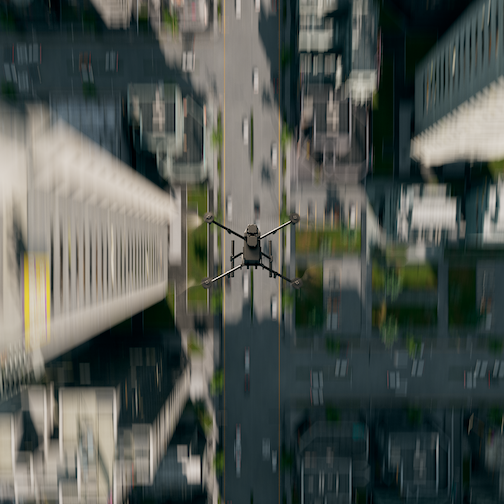
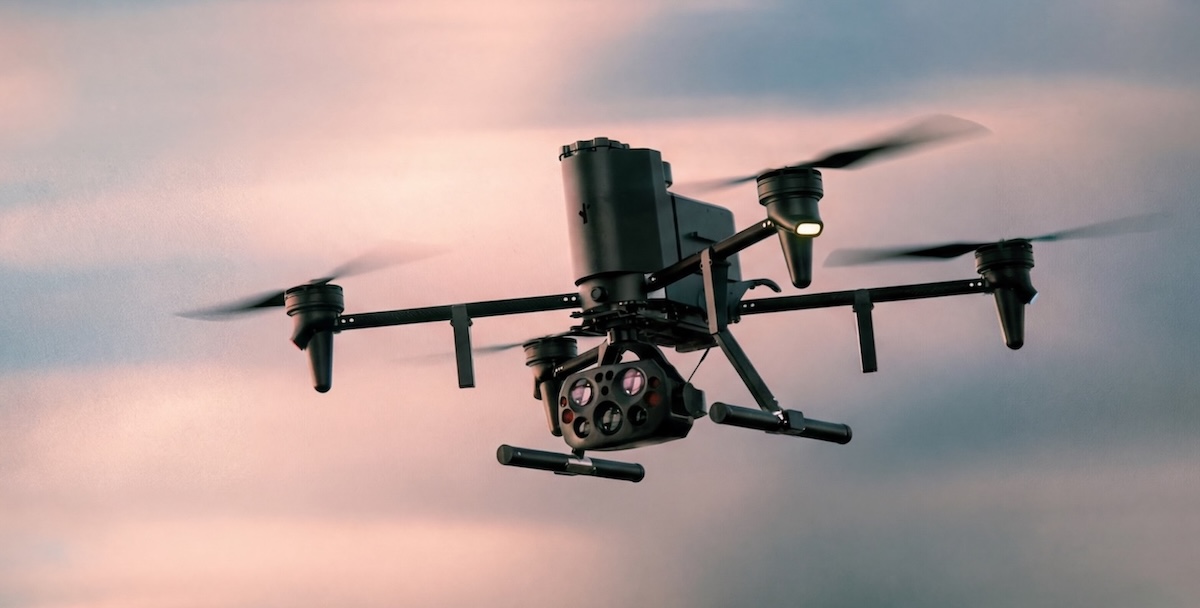
Instead of waiting for officers to arrive and assess the scene, an automated drone launches from a dock on campus the moment a qualifying call comes in. The drone flies to the location and streams live video back to dispatch, command staff, and responding officers in real time.
In many deployments, the drone arrives on scene in approximately 86 seconds, giving campus police aerial awareness before the first officer reaches the location.
Instead of responding blindly, officers arrive informed.
Dispatch can see whether a reported disturbance is active or dispersing. Supervisors can determine whether additional units are needed. Officers can identify safe approaches, locate involved individuals, and assess threats before stepping into the scene.
DFR shifts campus public safety operations from a reactive to an informed approach.
DFR for Campus Improves Officer Safety
One of the most important benefits of DFR programs on campus is improved officer safety.
Campus officers routinely respond to incidents where critical details are unknown. Whether it's a mental health crisis, a fight at student housing, a suspicious person call, an after-hours trespassing report, a large protest, or an active threat, officers are often expected to make decisions before they have a clear picture of what's happening.
In a traditional response model, officers often arrive without knowing:
- How many people are involved
- Whether weapons are present
- Whether suspects are still on scene
- Which direction individuals are moving
- Whether the scene is escalating or dispersing
That uncertainty creates risk. DFR helps reduce it.
By arriving overhead first, a drone can provide real-time visibility before officers reach the scene. Responding personnel gain a clearer understanding of the environment, potential threats, available access routes, and developing conditions while still en route.
For officers, that means fewer blind approaches and more informed decision-making. Teams can coordinate safer response strategies, stage resources appropriately, and adjust tactics based on what is actually happening rather than what is being reported secondhand.
In Dunwoody, Georgia, DFR gave officers a clearer view of the scene before they arrived. After Flock LPR helped find the suspect’s vehicle, DFR launched to help locate the suspect from above, keep him in view, and share real-time intelligence with the team on the ground. That allowed officers to coordinate their approach, confirm key identifying details, and take him into custody safely, without injury to officers, civilians, or the suspect.
This visibility becomes especially important during fast-moving or high-risk incidents. In situations involving large crowds, violent behavior, or active threats, even a few minutes of advance awareness can help officers approach more safely and respond more effectively.
For supervisors and command staff, live aerial intelligence also improves operational oversight. Resources can be deployed based on verified conditions rather than limited information, helping agencies avoid unnecessary exposure while making the most of available personnel.
On campuses where staffing is often stretched across large geographic areas, better information is more than an operational advantage. It is a critical officer safety tool.
The safest response is often the most informed one. DFR helps officers see more before they are asked to do more.
Faster Response Across Large Campus Environments
University campuses present unique response challenges that municipal agencies do not always face.
Officers may need to move between:
- Academic buildings
- Residence halls
- Stadiums and arenas
- Parking garages and lots
- Remote research facilities
- Medical campuses
- Open green spaces
Some universities cover hundreds of acres with limited roadway access, heavy pedestrian traffic, and constant event activity. Even highly proactive officers cannot physically be everywhere at once.
DFR for campus extends the reach of existing teams.
Instead of relying solely on ground response, departments can immediately place eyes on a scene anywhere within drone coverage areas. Aerial visibility dramatically shortens the time between dispatch and situational awareness.
That speed can be especially valuable during an active shooter emergency on campus, when officers need information as quickly as possible. Real-time aerial visibility helps responders understand what is happening on scene, coordinate their response, and make informed decisions as conditions evolve.
Agencies using DFR technology have reported:
- Up to 71% faster response times
- 89% more subjects and vehicles are located
- Approximately 20% of calls are cleared without requiring patrol dispatch
Results vary by agency deployment model, staffing, and operational policies. Clearing calls without requiring patrol dispatch may be especially valuable for campus police departments managing staffing shortages and large coverage areas. If one in five calls can be resolved or assessed without sending officers across campus, departments can preserve patrol resources for incidents that genuinely require boots on the ground.
What Does DFR Look Like In Practice?
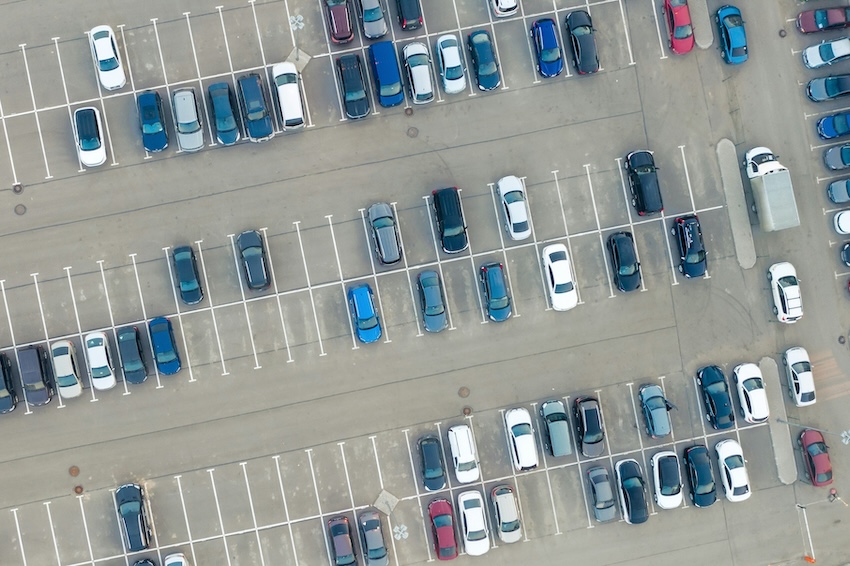
Imagine a disturbance call at a remote campus parking lot late at night.
Under a traditional response model, dispatch sends an officer while command waits for updates over the radio. Officers may arrive with little understanding of how many people are involved or whether the disturbance is still active.
With DFR for campus, the response changes immediately.
The drone launches as soon as the call is received. Within moments, dispatch and command have a live aerial view of the parking lot. Responding officers can see:
- The number of individuals involved
- Whether vehicles are attempting to leave
- Potential escape routes
- Crowd movement
- Whether the incident appears violent or is dispersing
By the time officers arrive, they already understand the environment they are entering. The response is faster and smarter.
The same operational advantages apply across a wide range of campus safety incidents:
- Monitoring large student gatherings
- Locating missing persons
- Locating suspects after vehicle break-ins
- Assessing emergency calls in isolated campus areas
- Supporting evacuation efforts during emergencies
- Providing overwatch during major athletic events
- Responding to an active shooter emergency
“A university campus should be a place where people can learn, teach, work, and gather with confidence,” said UST Police Chief H.E. Jenkins. “This is not about technology for technology’s sake. It is about giving our officers better tools to serve this campus, respond faster, and keep people safe.”
For universities focused on improving campus safety while operating with lean staffing models, aerial awareness becomes a force multiplier.
Campus Police Technology Must Evolve
Campus communities expect faster, more informed responses than ever before. Safety can play a major role in student enrollment.
More than 82% of college students surveyed in 2021 reported feeling concerned about their safety, and more than half reported they were extremely concerned.
Students, parents, faculty, and administrators want to know that campus police departments can respond quickly and effectively during emergencies. At the same time, agencies are facing:
- Staffing shortages
- Recruitment challenges
- Expanding campus footprints
- Increasing call volumes
- Growing expectations around transparency and accountability
Traditional response models alone are becoming harder to sustain.
That is why more departments are investing in campus police technology that improves operational efficiency without requiring additional personnel.
DFR for campus gives agencies the ability to:
- Extend coverage across large areas
- Improve visibility during active incidents
- Reduce unnecessary officer deployments
- Increase situational awareness for the command staff
- Improve officer safety
- Deliver faster response times
Importantly, DFR works for college campuses of all sizes alongside existing public safety infrastructure. Departments do not need to overhaul operations or dramatically expand staffing to implement it.
Instead, drones become an additional layer of real-time awareness integrated into daily response workflows.
Ready To See How DFR for Campus Works?
For agencies looking to improve campus safety without simply adding more personnel, DFR represents a fundamentally different approach to public safety operations.
If your department is managing a large campus footprint with limited staffing, DFR may be the fastest path to safer, more informed response.
See how universities are using drones and modern campus police technology to improve officer safety, reduce response times, and close the gap between dispatch and arrival.
Talk to a Campus Safety Expert to learn how DFR for campus can support your department’s public safety strategy.
Photo Credit:


Protect What Matters Most.
Discover how communities across the country are using Flock to reduce crime and build safer neighborhoods.